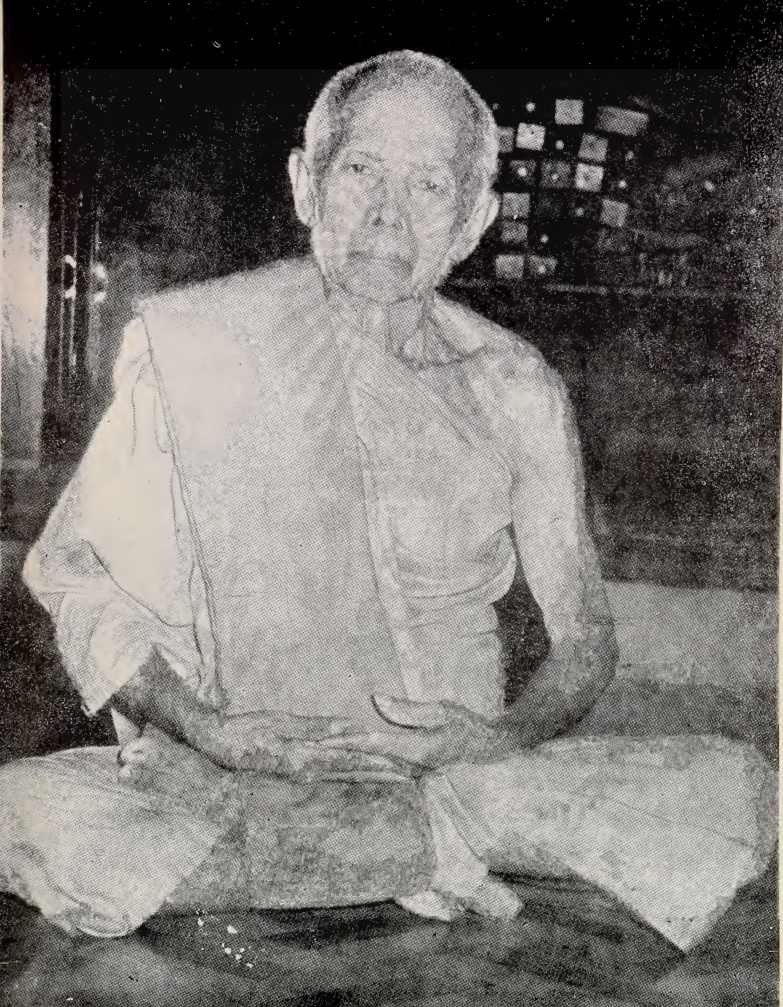
Luang Pu Tim Issariko (formal title: Phra Khru Phawanaphirat), is widely regarded as one of the most enigmatic and spiritually powerful meditation masters of Thailand’s eastern coast. Born during the reign of King Chulalongkorn (Rama V), Luang Pu Tim’s life was defined by strict forest asceticism, complete detachment from worldly riches, and the creation of the most coveted modern charm-and-prosperity amulets in Southeast Asia: the legendary Phra Khun Paen Pong Prai Kuman (พระขุนแผนผงพรายกุมาร).
I. Identity, Monastic Lineage, and Life
Understanding the life of Luang Pu Tim requires separating verified monastic biography from the colorful legends that circulate in commercial amulet circles:
| Attribute | Details & Context |
|---|---|
| Monastic Name | หลวงปู่ทิม อิสริโก (Luang Pu Tim Issariko) |
| Ecclesiastical Title | พระครูภาวนาภิรัต (Phra Khru Phawanaphirat), conferred in B.E. 2507. |
| Birth Date | June 16, 1879 (B.E. 2422) in Ban Lahan, Rayong Province. |
| Death Date | October 16, 1975 (B.E. 2518) at Wat Lahan Rai, Rayong. Age 96, with 69 years in the monkhood. |
| Spiritual Preceptors | Ordained in B.E. 2449 at Wat Lahan Rai. He was a grand-disciple of Luang Pu Sang, the legendary founder of Wat Lahan Rai who possessed deep spiritual and esoteric knowledge. |
The Ascetic Practice: Luang Pu Tim was known for his rigorous adherence to Tudong (forest pilgrimage). He spent decades wandering through the deep, malaria-ridden jungles of eastern Thailand, Cambodia, and Laos in complete solitude, practicing Samadhi. He slept on a bare wooden plank, owned only a single set of robes, and adhered to a strict vegetarian diet, consuming only one simple meal of rice and vegetables per day. Rayong locals referred to him as the “God of the East” due to his gentle, boundless compassion and the absolute purity of his monastic conduct.
II. The Secret Science of Pong Prai Kuman (ผงพรายกุมาร)
Among amulet collectors worldwide, Luang Pu Tim is synonymous with the creation of Pong Prai Kuman—a highly secretive, esoteric powder prepared in accordance with ancient Khmer occult sciences. Sceptics and newcomers are often startled by the traditional creation story of this powder, which is rooted in ancient animist-Buddhist synthesis:
- Sourcing the Material: The recipe required the skull bone of a stillborn child (a child who died in the womb) whose mother had passed away on a Saturday and was cremated on a Tuesday (Tai Wan Sao, Phao Wan Angkhan). In traditional Thai sorcery, this specific alignment is believed to represent the peak of raw spiritual energy.
- The Retrieval Ritual: Luang Pu Tim’s close lay disciples, **Kularb Phairungruang** (Uncle Kularb) and **Moei**, were dispatched to a local Rayong cemetery to perform the retrieval. They had to chant complex Pali protective mantras to ask the mother’s spirit for permission, cremate the child’s remains, and retrieve the sacred skull bone.
- Spiritual Transmutation (The Blessing): Once the bone was brought back, Luang Pu Tim spent weeks sitting in deep meditation over the ground powder. He chanted the *Metta Sutta* and the *Dharani protective mantras* continuously to **purify any negative, earth-bound spirit energies**. Through his meditative concentration, he transmuted the child’s spirit into a celestial *Deva* (benevolent angelic force) whose sole purpose is to protect the wearer and help them perform Buddhist merit-making.
This purified *Pong Prai Kuman* was then blended with other sacred powders (including Pong Pattamang and Pong Ittijae), shell lime, alms-round rice, and specific herbs like **Wahn Khattamon** to press his world-famous Phra Khun Paen amulets.
III. The Great Molds and the “Block Two” Controversy
The market for Luang Pu Tim’s Phra Khun Paen amulets is one of the most lucrative and highly contested in the entire amulet world. Collectors make strict distinctions between different molds (Pims) and blocks, each carrying a different status in the national market:
1. Block Long Pim (บล็อกลองพิมพ์) / Hone-Stone Mold
These were the very first trial pressings made at the temple by direct monk-disciples like **Luang Ta Phun**. They hand-carved the molds out of soft **hone-stone** (หินมีดโกน). Because the hone-stone was soft, the details are shallower and coarser. These early pieces often have a distinct **greenish tint** due to a heavy mixture of fresh herbs (Wahn Khattamon) and lack the precise, sharp details of later metal-pressed pieces. Local Rayong collectors heavily prize them because they are known to have been pressed directly in front of Luang Pu Tim at the temple.
2. Block Raek (บล็อกแรก) / Block Niyom (First Metal Mold)
Because the soft hone-stone molds wore down quickly, professional metal molds were commissioned in B.E. 2517. These produced the sharpest, most balanced, and mathematically perfect designs. They feature Khun Paen seated in meditation, flanked by two female attendants, with the Kuman child resting underneath his seat. This “First Block” represents the **absolute gold standard** of the national commercial market (the *Samakom* standard) and commands prices ranging from hundreds of thousands to millions of Baht depending on condition.
3. The Intense “Block Two” (บล็อกสอง) Dispute
No study of Luang Pu Tim is complete without addressing the “Block Two” controversy, which represents a major split in the Thai collector community:
- The Pro-Block Two School (Local Rayong/Alternative Associations): They argue that “Block Two” was created during Luang Pu Tim’s lifetime (between B.E. 2517–2518) as the first metal molds became worn out or damaged, making them a fully authentic late-period pressing blessed by the master.
- The Skeptical/Mainstream School (Samakom Standard): National commercial dealers mostly **reject or heavily discount Block Two**, classifying them as retroactive pressings made *after* Luang Pu Tim’s passing in B.E. 2518 (commonly cited as being made around B.E. 2526). They claim commercial dealers used original temple materials and leftover *look-om* (sacred powder balls) to press new amulets, having them blessed posthumously by Luang Pu Tim’s close companion **Luang Pu Kaew Geesaro**.
IV. Famous Medal Coins: Sema and Charoen Phorn
Beyond the powder-based Khun Paen, Luang Pu Tim consecrated highly sought-after copper and metal coins (Rian) that are famous for extreme protective miracles (Kong Krapan):
- Rian Sema (เหรียญเสมา): Highly intricate shield-shaped coins made in B.E. 2518. Authenticity is verified by studying specific code stamps (such as the “Na” code) and precise metal-cutting scars on the coin’s edge.
- Rian Charoen Phorn (เหรียญเจริญพร): Made in both “upper” (Charoen Phorn Bon) and “lower” (Charoen Phorn Lang) text variants. Highly prized for bringing prosperity and harmonious speech to the wearer.
V. Primary Sources and References
- Thairath Beliefs & Horoscopes Archive (April 2025): “The Mystery of the Khun Paen Pong Prai Kuman Molds: Secrets No One Knows” (discussing the hone-stone molds and the Block Two dispute).
- Silpa-mag (Matichon): Biographies and historical transitions of Rayong’s local Buddhist lineages.
- Rayong Province Historical Records: Documents the life of Phra Khru Phawanaphirat and his contributions to local education and monastery building.
Frequently Asked Questions (FAQ) & Key Concepts
Q: Who was Luang Pu Tim of Wat Lahan Rai?
Luang Pu Tim Issariko (1879–1975) was a highly revered Thai Buddhist meditation monk and the former Abbot of Wat Lahan Rai in Rayong Province. He was celebrated for his absolute humility, strict vegetarian asceticism, and as the creator of some of the most spiritually powerful amulets in modern Thai history.
Q: What is Pong Prai Kuman (ผงพรายกุมาร)?
Pong Prai Kuman is a highly sacred powder prepared by Luang Pu Tim using the skull bone of a stillborn child whose mother died on a Saturday and was cremated on a Tuesday. The bone was ground and subjected to weeks of intense meditative purification by Luang Pu Tim, transmuting the spirit into a benevolent celestial Deva that works to protect and bring prosperity to the wearer.
Q: What is the difference between Block One and Block Two?
Block One (Block Raek / Block Niyom) was the first metal mold used to press Khun Paen amulets in B.E. 2517 during Luang Pu Tim’s lifetime, and it is universally accepted by the mainstream national commercial market. Block Two is highly controversial: local Rayong collectors believe it is an authentic late-period pressing blessed by Luang Pu Tim, while mainstream national dealers reject it, claiming it was pressed posthumously around B.E. 2526 by commercial dealers.
Q: What is the Block Long Pim (บล็อกลองพิมพ์)?
The Block Long Pim represents the very first trial pressings of the Phra Khun Paen amulets. Disciples hand-carved the molds out of soft hone-stone at the temple. These pieces are rougher, have shallower details, and often carry a distinct greenish tint from the heavy mixture of Wahn Khattamon herbs.