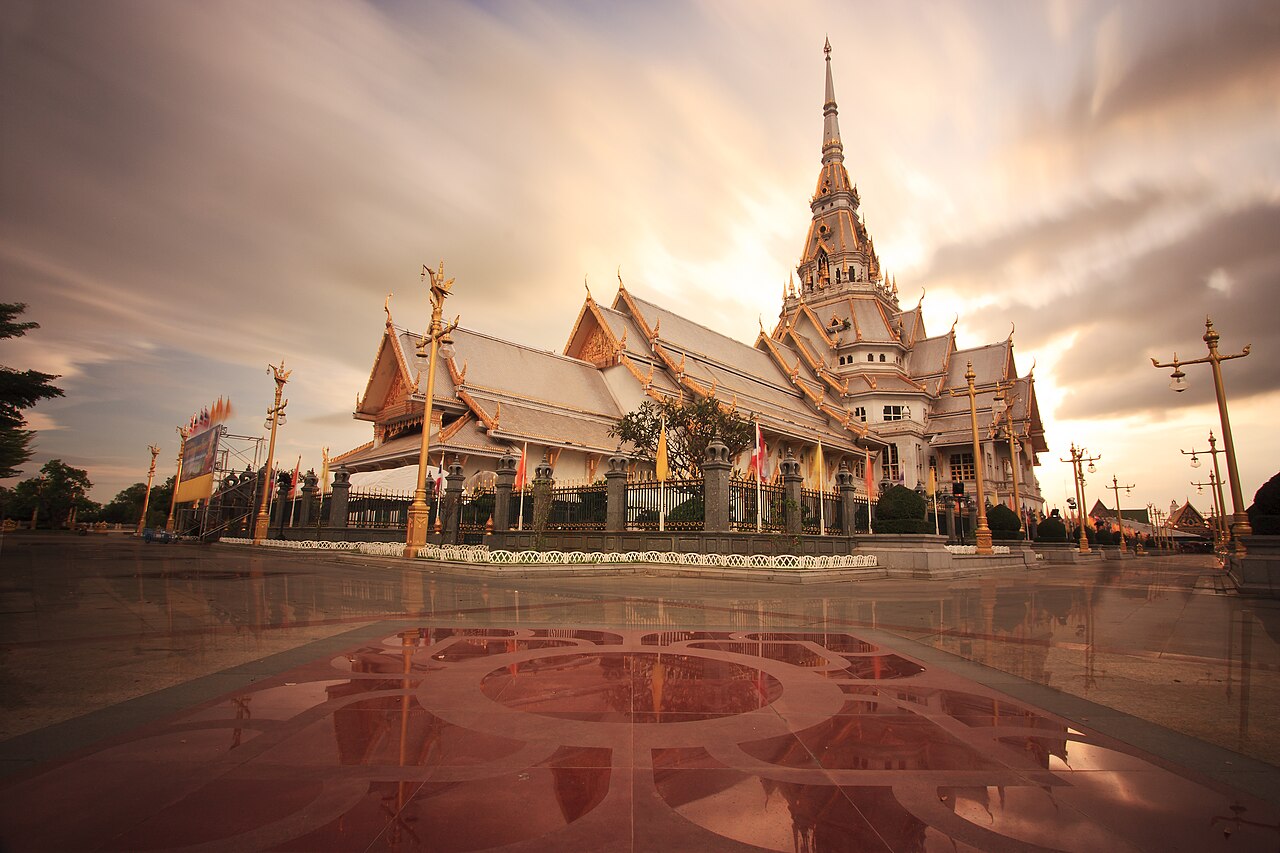
In the heart of Thailand, nestled on the banks of the Bang Pakong River in Chachoengsao province, stands Wat Sothornwararam Woraviharn, a majestic temple that serves as the revered home of Luang Phor Sothorn. More than just a statue, Luang Phor Sothorn is an ancient, profoundly venerated Buddha image, embodying centuries of faith, miraculous legends, and the deep spiritual devotion of the Thai people. Its presence resonates with a serene power, drawing countless pilgrims seeking blessings, solace, and a connection to the Dhamma.
The Miraculous Origin: A Buddha from the River
The story of Luang Phor Sothorn is steeped in enchanting legend, widely cherished and passed down through generations. It is said that in ancient times, three sacred Buddha images miraculously appeared floating down the Ping River (or some accounts say the Mekong or Chao Phraya before entering the Bang Pakong). Local villagers, witnessing this extraordinary sight, attempted to retrieve them, but the images proved immensely heavy and unmovable by ordinary means. It was believed that only those with pure hearts and sufficient merit could invite these sacred forms to land.
One of these images, the second to be enshrined, eventually drifted into the Bang Pakong River and was discovered by the people of Chachoengsao. After numerous failed attempts to retrieve it using ropes and human strength, a revered monk or master suggested a spiritual approach. A ritual was performed, involving the chanting of sacred verses and the offering of prayers, culminating in the placement of a “sacred thread” (สายสิญจน์ – Sai Sin) around the image. With this spiritual invitation, the Buddha image miraculously became light enough to be brought ashore and was enshrined at Wat Sothorn.
This miraculous arrival cemented Luang Phor Sothorn’s status as a Buddha image of extraordinary power, born not of human hands alone, but blessed by nature and divine intervention. It represents the enduring belief in the mystical connection between the spiritual realm and the physical world.
The Sacred Iconography of Luang Phor Sothorn
The original Luang Phor Sothorn is a seated Buddha image in the Mara Wichai (Subduing Mara) posture, characteristic of the late Ayutthaya or early Rattanakosin period, though some art historians suggest influences from the U-Thong style. The image depicts the Buddha seated cross-legged, with his right hand resting on his right knee, fingers gently touching the earth, symbolizing his calling the Earth to witness his enlightenment against the temptations of Mara.
Today, the original bronze image is enveloped within a thick plaster casing, which was applied centuries ago to protect it from theft and damage, and perhaps to allow devotees to apply gold leaf without harming the core image. This casing has also visually enlarged the statue, making it appear grander. The Luang Phor Sothorn we see today is thus a majestic, gilded Buddha, radiating an aura of profound serenity and wisdom.
Wat Sothornwararam: A Beacon of Devotion
Wat Sothornwararam Woraviharn is one of Thailand’s most significant royal temples (Woraviharn status), signifying its importance and direct patronage from the monarchy. The magnificent Ubosot (ordination hall) housing Luang Phor Sothorn is a testament to the devotion it inspires. Adorned with intricate murals depicting the life of the Buddha and various Buddhist cosmology, the hall itself is an architectural marvel, creating an atmosphere of deep reverence for visitors.
The temple complex extends beyond the Ubosot, offering various facilities for pilgrims, including areas for making merit, purchasing offerings, and finding quiet reflection. The harmonious blend of traditional Thai architecture with modern amenities ensures that the spiritual journey for devotees is both profound and accessible.
Deep Spiritual Significance and Attributed Blessings
Luang Phor Sothorn is revered as a source of immense blessings, and pilgrims from all corners of Thailand and beyond visit Wat Sothornwararam with specific intentions. The primary blessings attributed to Luang Phor Sothorn include:
- Health and Healing: Many devotees pray for recovery from illness, seeking relief for themselves or loved ones.
- Protection: It is believed to offer strong protection from danger, accidents, and negative influences.
- Prosperity and Success: Business owners, students, and those embarking on new ventures often seek blessings for success and good fortune.
- Fulfilled Wishes: A significant number of visitors come to make vows (Kae Bon – แก้บน), promising to perform good deeds or offer specific items if their sincere wishes are granted.
The power of Luang Phor Sothorn, however, is understood within the Buddhist framework. It is not merely a magical entity, but a sacred conduit that amplifies one’s own merit, faith, and pure intentions. The blessings received are often seen as a reflection of one’s own good karma and a reminder to continue practicing the Dhamma.
Pilgrimage, Offerings, and Practice
A visit to Wat Sothornwararam is a deeply personal and spiritual experience. Upon entering the Ubosot, devotees engage in a series of traditional practices:
- Paying Respects (Wai Phra): Bowing three times before the image, lighting incense sticks and candles, and offering fragrant flowers, typically lotus blooms.
- Chanting: Reciting traditional Buddhist prayers and mantras, focusing on mindfulness and devotion.
- Making Wishes and Vows: Sincere prayers are offered, often accompanied by a promise of a ‘Kae Bon’ offering if the wish is granted. A distinctive offering for fulfilled vows at Wat Sothorn is the boiled egg, often presented in vast quantities.
- Merit-Making: Donating to the temple for its upkeep or various charitable causes, which is considered a fundamental aspect of Buddhist practice to accumulate good karma.
The atmosphere within the Ubosot is one of quiet contemplation and shared devotion, uniting people from all walks of life in their common quest for spiritual well-being and a deeper connection to Buddhist teachings.
Luang Phor Sothorn Amulets and Their Significance
Beyond the temple, Luang Phor Sothorn’s reverence extends into everyday life through its widely popular amulets. These small, consecrated pendants are worn by millions of Thais, believed to carry the protective and blessing powers of the original image. Each amulet is a miniature representation, serving as a constant reminder of faith, mindfulness, and the spiritual strength associated with Luang Phor Sothorn.
An Enduring Legacy of Faith
Luang Phor Sothorn stands as a powerful symbol of enduring faith, cultural heritage, and the profound spiritual heart of Thai Buddhism. Its miraculous origins inspire awe, its serene presence offers solace, and its blessings guide countless devotees towards a life of greater well-being and spiritual understanding. More than an object of veneration, Luang Phor Sothorn serves as a tangible link to the Dhamma, encouraging practitioners to cultivate merit, practice mindfulness, and embody the compassionate wisdom of the Buddha in their daily lives.
Frequently Asked Questions (FAQ) & Key Concepts
Q: What is Luang Phor Sothorn?
Luang Phor Sothorn is one of Thailand’s most revered and ancient Buddha images, located at Wat Sothornwararam in Chachoengsao province, known for its miraculous origins and attributed blessings.
Q: What is the legend behind Luang Phor Sothorn’s origin?
Legend states that Luang Phor Sothorn was one of three Buddha images found floating in a river, defying ordinary attempts to retrieve it until a spiritual ritual made it possible to bring it ashore.
Q: Where is Luang Phor Sothorn enshrined?
Luang Phor Sothorn is enshrined within the magnificent Ubosot (ordination hall) of Wat Sothornwararam Woraviharn in Chachoengsao, Thailand.
Q: What blessings are commonly attributed to Luang Phor Sothorn?
Devotees commonly seek blessings for health, protection from danger, prosperity in business, academic success, and the fulfillment of sincere wishes.
Q: What traditional offerings are made to Luang Phor Sothorn?
Common offerings include flowers, incense, candles, and prayers; a distinctive offering for fulfilled vows (Kae Bon) at Wat Sothorn is the offering of boiled eggs.
Q: What is the significance of the Mara Wichai posture?
The Mara Wichai (Subduing Mara) posture depicts the Buddha touching the earth to call it to witness his enlightenment, symbolizing victory over temptation and profound spiritual realization.
Q: How do Luang Phor Sothorn amulets relate to the main image?
Luang Phor Sothorn amulets are consecrated replicas believed to carry the protective and blessing powers of the original image, serving as personal reminders of faith and spiritual guidance.