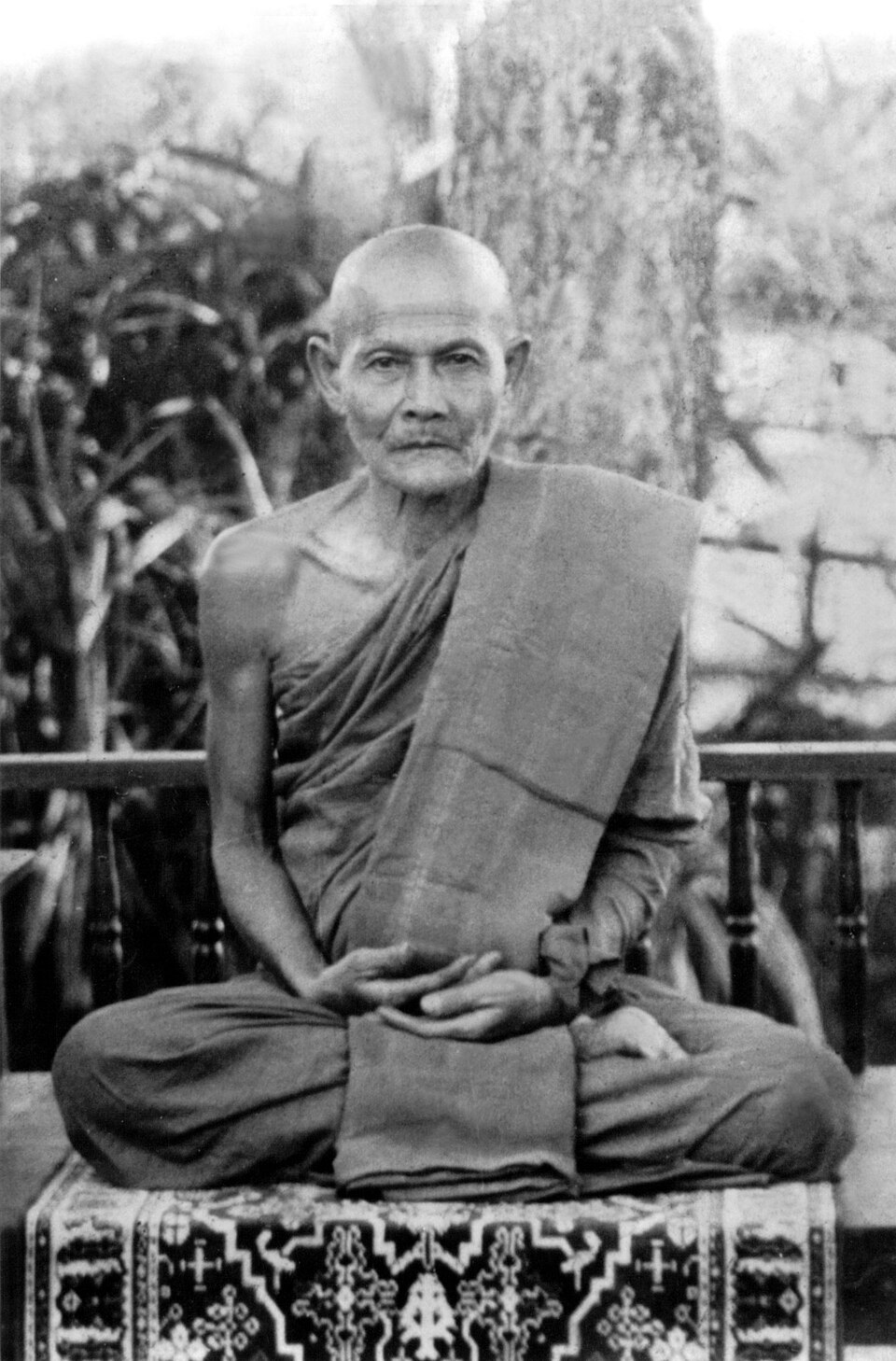
In the spiritual tapestry of Thailand, few figures loom as large or shine as brightly as Phra Ajahn Mun Bhuridatta Thera. Revered as the patriarch of the contemporary Thai Forest Tradition, his life was a profound testament to the pursuit of authentic Dhamma, re-establishing a vigorous, direct path to liberation amidst a monastic landscape that had, for many, grown too conventional.
The Spiritual Landscape of Early 20th-Century Siam
Before Ajahn Mun, Thai Buddhism, while deeply ingrained in society, often emphasized academic study of the Pāli Canon and ceremonial observances. While these aspects hold their own merit, the direct, intense practice of meditation (bhavana) leading to personal realization of Dhamma-Vinaya (the Teachings and Discipline) had become less prevalent. Monasteries in bustling towns often focused on scholarly pursuits and community engagement, sometimes at the expense of solitary forest dwelling and rigorous mental development.
It was into this context that Ajahn Mun emerged, not as a revolutionary seeking to overthrow established norms, but as a pure-hearted seeker striving to rediscover the very essence of the Buddha’s path, echoing the ancient practices of the early Sangha.
A Life Dedicated to Dhamma: From Village to Vimutti
Born in 1870 in Ban Kham Bong, Ubon Ratchathani province, northeastern Thailand, Mun Bhuridatta (his given name was Mun) displayed an early inclination towards spiritual life. He ordained as a novice and then as a bhikkhu (monk) at the age of 23. Discontent with the purely academic and ritualistic aspects of monastery life, he soon felt an irresistible pull towards the untamed wilderness – the forest.
Inspired by accounts of ancient monks who meditated deeply in solitary places, Ajahn Mun dedicated himself to the tudong (Pāli: dhutaṅga) practices. This involved austere observances, such as living in forests, eating only one meal a day, wearing robes made from discarded cloth, and constantly practicing mindfulness. He wandered extensively across Thailand, Laos, and Burma, facing the rigours of nature, solitude, and internal purification. The forest became his classroom, the wild animals his companions, and his own mind the battleground for wisdom.
Through relentless meditation, particularly Samatha (calmness) and Vipassana (insight), Ajahn Mun began to penetrate the deeper realities of existence. He sought direct insight into the nature of suffering, its origin, its cessation, and the path leading to its cessation – the Four Noble Truths. His practice was characterized by fierce determination, an unshakeable faith in the Dhamma, and a profound respect for the Vinaya.
Realization and the Path of Direct Experience
It is widely believed among his disciples and followers that Ajahn Mun attained the highest levels of spiritual realization, culminating in Arahantship – the state of a fully enlightened being. While he never publicly proclaimed such an achievement, his profound wisdom, clarity, and the transformative effect he had on countless individuals served as undeniable evidence of his deep penetration of the Dhamma.
His teachings emphasized the necessity of experiencing truth for oneself, not merely intellectually understanding it. He guided his disciples to look directly into their own minds, to observe the arising and passing of phenomena, and to develop wisdom (paññā) through unwavering effort and moral purity.
The Birth and Spread of the Thai Forest Tradition
Ajahn Mun did not set out to create a “new” tradition. Rather, his uncompromising dedication to the ancient path naturally attracted earnest seekers. Monks, weary of conventional monasticism, began to gather around him, drawn by his radiant presence, profound wisdom, and uncompromising commitment to the Dhamma.
He taught primarily through example and by challenging his disciples to face their defilements head-on. His wisdom was often conveyed through parables, direct questioning, and powerful, sometimes stern, guidance, urging practitioners to rely on their own internal efforts rather than external rituals or beliefs.
Key Disciples and Global Reach
The Thai Forest Tradition today thrives largely due to the many enlightened disciples Ajahn Mun inspired and trained. Notable among them are:
- Ajahn Maha Bua Ñāṇasampanno: His closest disciple, who meticulously documented Ajahn Mun’s teachings in “Venerable Ajahn Mun Bhuridatta Thera: A Spiritual Biography”.
- Ajahn Chah Subhaddo: Who founded Wat Pah Pong and its extensive network of forest monasteries, significantly contributing to the spread of the Forest Tradition globally, especially in Western countries.
- Ajahn Sao Kantasilo: An early and influential disciple who also had many accomplished students.
- Ajahn Lee Dhammadharo: Renowned for his unique and direct meditation instructions.
These venerable teachers, and many others, carried Ajahn Mun’s flame forward, establishing monasteries that continue his legacy of rigorous meditation, strict Vinaya adherence, and genuine Dhamma practice. The tradition’s emphasis on simplicity, direct experience, and the wisdom of forest living has resonated deeply with practitioners worldwide, transcending cultural and geographical boundaries.
Legacy and Enduring Relevance
Ajahn Mun Bhuridatta passed away in 1949, leaving behind a profound and indelible mark on Thai Buddhism. His life and teachings serve as a timeless beacon for those seeking the authentic path to liberation. He reminded a generation, and continues to remind us today, that the Dhamma is not merely a philosophy or a set of rituals, but a living, experiential truth to be realized within oneself.
The Thai Forest Tradition, born from his unwavering dedication, remains a vibrant and essential stream of Theravada Buddhism. It offers a powerful counterpoint to materialism and superficiality, guiding practitioners back to the purity, simplicity, and profound wisdom of the Buddha’s original teachings – a path forged in the solitude of the forest, and perfected in the silence of the mind.
Frequently Asked Questions (FAQ) & Key Concepts
Q: What is the Thai Forest Tradition?
The Thai Forest Tradition is a lineage of Theravada Buddhism emphasizing strict adherence to monastic discipline (Vinaya), rigorous meditation in forest dwellings, and the direct realization of Dhamma, often attributed to the teachings and practice of Ajahn Mun Bhuridatta.
Q: What was Ajahn Mun Bhuridatta’s main contribution?
Ajahn Mun Bhuridatta’s main contribution was revitalizing the direct, experiential practice of Dhamma and meditation in Thailand, inspiring a return to the austere and contemplative lifestyle of early Buddhist monks, thereby pioneering the influential Thai Forest Tradition.
Q: Who were some of Ajahn Mun’s notable disciples?
Some of Ajahn Mun’s notable disciples include Ajahn Maha Bua Ñāṇasampanno, Ajahn Chah Subhaddo, Ajahn Sao Kantasilo, and Ajahn Lee Dhammadharo, all of whom became highly respected masters and further propagated the Forest Tradition.
Q: Why is forest dwelling (tudong) important in this tradition?
Forest dwelling (tudong) is crucial as it fosters solitude, austerity, and an environment conducive to intense meditation and confrontation with one’s defilements, mirroring the practices of the Buddha and his early disciples.
Q: What does Vimutti mean in the context of Ajahn Mun’s teachings?
Vimutti refers to liberation or release from suffering and defilements, the ultimate goal of Buddhist practice, which Ajahn Mun emphasized must be realized through direct insight (vipassana) and personal effort, not mere intellectual understanding.
Q: How did Ajahn Mun’s teachings influence modern Thai Buddhism?
Ajahn Mun’s teachings profoundly influenced modern Thai Buddhism by shifting focus from purely academic study and ritual to rigorous meditation, strict monastic discipline, and the pursuit of direct spiritual realization, significantly shaping the contemplative tradition.