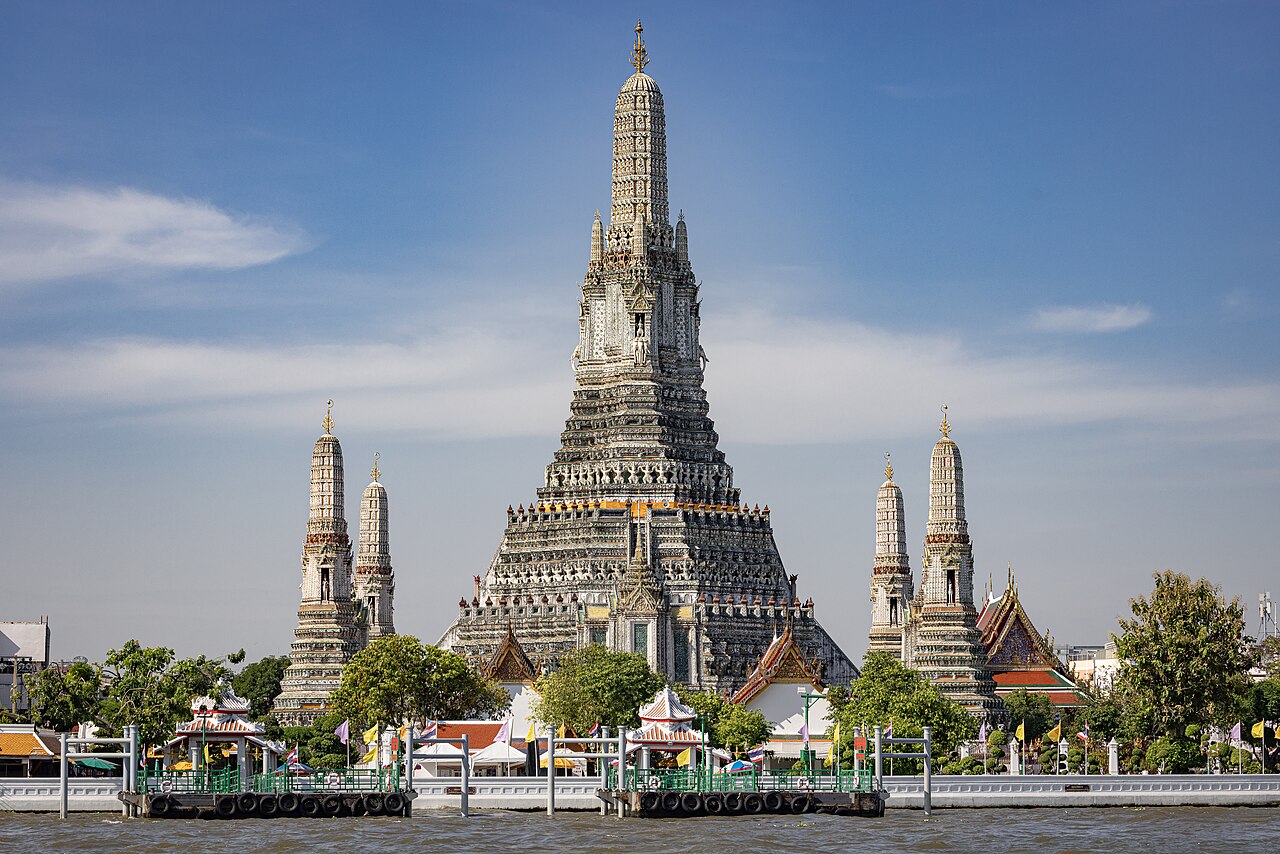
In the vibrant heart of Bangkok, beside the tranquil flow of the Chao Phraya River, stands an emblem of profound spiritual devotion and architectural splendor: Wat Arun Ratchawararam Ratchawaramahawihan, more commonly known as Wat Arun, the Temple of Dawn. More than just a breathtaking landmark, Wat Arun is a living testament to Thailand’s rich Buddhist heritage, its majestic structure a pinnacle of the Rattanakosin architectural style.
A Sacred Legacy: Origins and Transformation
The history of Wat Arun predates the founding of Bangkok as the capital, tracing its roots back to the Ayutthaya period when it was known as Wat Makok. After the fall of Ayutthaya and the establishment of Thonburi as the new capital, King Taksin the Great designated it as the royal temple and housed the revered Emerald Buddha there for a period, renaming it Wat Chaeng. However, it was during the Rattanakosin era, particularly under the patronage of King Rama II and King Rama III, that Wat Arun underwent its most significant transformation, evolving into the grand edifice we admire today. This period of intense royal patronage profoundly shaped its distinctive architectural identity.
The Rattanakosin Aesthetic: Form and Function
Rattanakosin architecture, flourishing from the late 18th century onwards, marked a distinct evolution in Thai temple design, blending traditional Sukhothai and Ayutthaya influences with new interpretations and materials. Wat Arun stands as one of its most magnificent exemplars, characterized by:
- Monumental Scale: An emphasis on grandeur and imposing structures, reflecting the power and devotion of the Chakri dynasty.
- Intricate Ornamentation: A lavish use of mosaic work, stucco, and ceramics, creating surfaces that shimmer with detail.
- Cosmic Symbolism: Deep connections to Buddhist cosmology, with structures often representing sacred mountains and celestial realms.
- Fine Craftsmanship: The meticulous application of traditional Thai artistry, from sculpting to mural painting.
The Iconic Central Prang: Mount Meru Embodied
The undisputed centerpiece of Wat Arun is its towering central prang (Khmer-style tower), a stupa reaching approximately 79 meters into the sky. This majestic edifice is far more than an architectural marvel; it is a profound representation of Mount Meru, the axial world-mountain in Buddhist and Hindu cosmology, symbolizing the center of the universe. The ascent to its higher terraces is a metaphor for the journey towards enlightenment.
Every inch of the prang’s surface is adorned with an astonishing mosaic of meticulously placed pieces of Chinese porcelain and seashells, reflecting the artistic ingenuity of the period. These fragments, often donated by the royal court from broken dishes, were repurposed into dazzling floral patterns and intricate motifs that catch the sunlight, creating a spectacular, ever-changing display of color and light. Guarding the four cardinal points of the prang are statues of the Hindu god Indra riding his three-headed elephant, Erawan, a testament to the syncretic influences within Thai culture.
Mythological Guardians and Celestial Beings
Flanking the central prang are four smaller prangs, each adorned with similar exquisite detail. Throughout the temple grounds, one encounters a rich tapestry of mythological figures that serve both as decoration and spiritual guardians:
- Yakshas: Giant guardian figures, often fierce in appearance, protecting the sacred grounds. Most famously, the two colossal ‘Yak Wat Chaeng’ stand guard at the temple’s entrance.
- Garudas: Mythical bird-like creatures, often depicted supporting the prangs, symbolizing power and protection.
- Kinnaree and Kinorn: Half-human, half-bird celestial beings, graceful and elegant, representing beauty and harmony.
- Devas: Heavenly deities, adorning various tiers, symbolizing the celestial realms.
These figures are not merely decorative but are integral to the temple’s function as a cosmic diagram, embodying the protective forces and celestial inhabitants of the Buddhist universe.
The Ubosot and Royal Patronage
Beyond the prangs, the Ubosot (ordination hall) holds significant spiritual importance. It houses the principal Buddha image, Phra Phuttha Dhammisararat Lokathatdilok, believed to have been cast during the reign of King Rama II. The walls of the ubosot are adorned with exquisite murals depicting scenes from the Jataka tales – stories of the Buddha’s previous lives – and the Traiphum Phra Ruang, the Buddhist cosmology. The front of the ubosot is famously guarded by two stone giants, symbolic protectors of the sacred space. The Ashes of King Rama II are interred at the base of the main Buddha image, cementing the temple’s deep connection to the monarchy.
The continuous royal patronage during the Rattanakosin period ensured not only the physical grandeur of Wat Arun but also its enduring spiritual vitality. Each monarch contributed to its embellishment and maintenance, solidifying its status as one of Thailand’s most revered royal temples.
The Temple of Dawn: A Metaphor for Enlightenment
The moniker “Temple of Dawn” is deeply poetic and reflective of the temple’s unique aesthetic. While some believe it refers to King Taksin’s arrival at the temple at dawn, a more profound interpretation arises from its intricate decoration. As the first rays of the morning sun strike the ceramic-encrusted surfaces of the prang, they ignite a breathtaking shimmer, making the temple appear to glow from within. This dazzling spectacle is not merely beautiful; it is a powerful metaphor for enlightenment, the dawn of understanding that dispels the darkness of ignorance, a central theme in Buddhist philosophy. It serves as a daily reminder of potential spiritual awakening and the luminosity of wisdom.
An Enduring Symbol of Thai Heritage
Wat Arun transcends its physical form to become a powerful symbol of Thailand’s cultural identity, spiritual devotion, and artistic excellence. It stands as a profound architectural statement of the Rattanakosin era, embodying its artistic principles, historical narratives, and deep reverence for the Dharma. For pilgrims and visitors alike, a journey to Wat Arun is an encounter with a timeless marvel, a place where history, art, and spirituality converge in a truly majestic display.
Frequently Asked Questions (FAQ) & Key Concepts
Q: What is the primary architectural style of Wat Arun?
Wat Arun is a quintessential example of Rattanakosin architectural style, characterized by its monumental scale, intricate ceramic mosaic work, and deep Buddhist cosmological symbolism.
Q: What does the central prang of Wat Arun symbolize?
The towering central prang (Khmer-style tower) of Wat Arun symbolizes Mount Meru, the cosmic mountain at the center of the Buddhist and Hindu universe, representing the path to spiritual elevation.
Q: Why is Wat Arun called “The Temple of Dawn”?
It is called “The Temple of Dawn” because its ceramic-encrusted surfaces famously shimmer and glow with breathtaking beauty when illuminated by the first rays of the morning sun, symbolizing spiritual enlightenment.
Q: What unique materials were used for Wat Arun’s decoration?
The temple is famously adorned with intricate mosaics made from thousands of pieces of salvaged, broken Chinese porcelain and seashells, meticulously arranged into dazzling floral patterns and decorative motifs.
Q: Who initiated the major reconstruction and embellishment of Wat Arun?
The most significant expansions and embellishments of Wat Arun were initiated during the reign of King Rama III of the Rattanakosin Kingdom, though King Rama II also contributed to its initial grandeur.
Q: What is the spiritual significance of visiting Wat Arun?
Visiting Wat Arun offers an opportunity for spiritual reflection, connecting with centuries of Buddhist devotion, and appreciating the profound symbolism embedded in its architecture, reminding practitioners of the journey towards inner peace and wisdom.