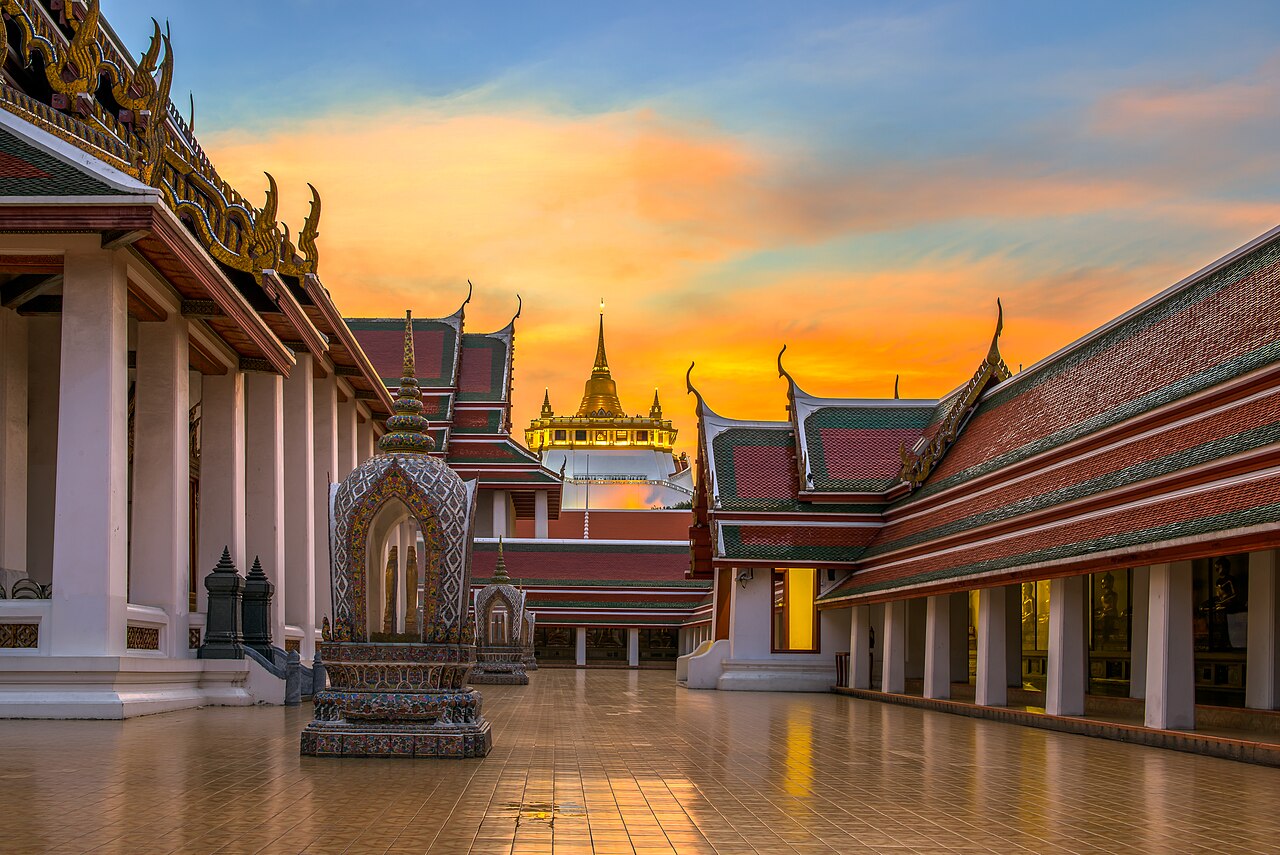
In the vibrant heart of Bangkok, amidst the rhythmic pulse of the city, stands a venerable landmark that transcends mere physical presence: Wat Saket Ratcha Wora Maha Wihan, affectionately known worldwide as the Golden Mount or Phu Khao Thong. This sacred site offers more than just breathtaking panoramic views; it provides a profound journey into Thailand’s spiritual heritage, a quiet refuge for contemplation, and a testament to centuries of Buddhist devotion.
A Legacy Etched in Time: The Genesis of Wat Saket
The origins of Wat Saket trace back to the Ayutthaya Kingdom, initially known as Wat Sa Kae. Upon the establishment of Bangkok as the new capital, King Rama I (Phra Phutthayotfa Chulalok) of the Chakri Dynasty, deeply committed to the restoration and preservation of Buddhist temples, meticulously renovated and elevated its status. It was during this era that the temple received its present name, Wat Saket, signifying “washing of hair,” a symbolic purification and renewal.
Throughout subsequent reigns, Wat Saket continued to evolve. King Rama III (Phra Nangklao) initiated the ambitious project of creating a man-made mountain, envisioning a grand chedi atop it. This vision, however, proved challenging due to the soft alluvial soil of Bangkok. It was finally under the reign of King Rama IV (Mongkut) and fully completed by King Rama V (Chulalongkorn) that the structure we see today, the Phu Khao Thong, or Golden Mount, majestically crowned with a golden chedi, came to fruition.
The Golden Mount: A Spiritual Ascent to Wisdom
The Phu Khao Thong is not merely an architectural marvel but a symbolic spiritual ascent. Visitors embark on a serene climb of approximately 300 steps, winding around the artificial hill. Each step taken is an invitation to mindfulness, a gradual detachment from the clamor below, leading towards a higher state of awareness and peace.
The Sacred Relic
At the apex of the Golden Mount lies a gleaming chedi, housing a precious relic of the Lord Buddha, gifted from India by the British government during the reign of King Rama V. This sacred artifact elevates Wat Saket’s spiritual significance, transforming it into a revered pilgrimage site for Buddhists seeking blessings and to make merit (tham bun). The presence of the relic reminds practitioners of the Buddha’s teachings and the path to enlightenment.
Architectural Harmony and Symbolic Elements
Beyond the Golden Mount itself, the temple complex features a beautiful Ubosot (ordination hall), Viharn (assembly hall), and exquisite murals depicting Jataka tales—stories of the Buddha’s previous lives—that impart profound moral lessons. Bell towers line the pathway, their gentle chimes resonating with the winds, echoing the Buddhist principle of impermanence and the soothing sound of Dhamma.
A Sanctuary Amidst Suffering: Wat Saket and the Cholera Epidemics
The history of Wat Saket is inextricably linked to Bangkok’s past struggles, particularly the devastating cholera epidemics of the 19th century. During these dark times, Wat Saket served as a mass cremation ground for tens of thousands of victims. The sheer scale of loss underscored the Buddhist teachings on dukkha (suffering) and anicca (impermanence), transforming the temple into a poignant reminder of life’s transient nature and the importance of compassion.
This period cemented Wat Saket’s role not only as a place of worship but also as a powerful site for contemplating the cycle of life, death, and rebirth, offering solace to the grieving and a space for reflection on existential truths.
The Spirit of Merit-Making and Community
Wat Saket continues to be a vibrant center for Buddhist practice. Throughout the year, devotees visit to offer prayers, light incense, and make financial contributions, all acts of tham bun (merit-making). The annual temple fair during the Loy Krathong festival is a particularly lively event, drawing crowds who come to honor the Buddha, enjoy traditional festivities, and engage in communal spiritual activities.
The panoramic views from the summit—a breathtaking tapestry of old and new Bangkok—serve as a powerful metaphor. From this elevated perspective, one can observe the city’s intricate dance, finding a sense of detachment and clarity, much like the wisdom gained through Buddhist practice.
Conclusion: A Timeless Beacon of Dhamma
Wat Saket, the Golden Mount, stands as a timeless beacon, guiding both the faithful and the curious. It is a place where history, architecture, and profound spiritual teachings converge. To visit Wat Saket is to embark on a journey that transcends the physical climb; it is an opportunity for introspection, to connect with the deep roots of Thai Buddhism, and to experience a serene moment of reflection high above the bustling world.
Frequently Asked Questions (FAQ) & Key Concepts
Q: What is the primary spiritual significance of Wat Saket?
Wat Saket serves as a profound spiritual sanctuary, housing a sacred relic of the Lord Buddha, making it a significant pilgrimage site for merit-making and contemplation of Buddhist teachings on impermanence and compassion.
Q: When was the Golden Mount (Phu Khao Thong) at Wat Saket completed?
The ambitious project of the Golden Mount was initiated by King Rama III and successfully completed during the reigns of King Rama IV and King Rama V, culminating in the golden chedi at its summit.
Q: What sacred relic is enshrined within the chedi of the Golden Mount?
The chedi at the summit of the Golden Mount enshrines a precious relic of the Lord Buddha, which was gifted from India during the reign of King Rama V.
Q: What historical role did Wat Saket play during the 19th-century cholera epidemics?
During the devastating cholera epidemics, Wat Saket functioned as a primary mass cremation ground for victims, highlighting its profound connection to themes of suffering, impermanence, and compassionate refuge.
Q: Is there an entrance fee to climb the Golden Mount?
Yes, there is typically a modest entrance fee for foreigners to climb the Golden Mount, which contributes to the temple’s maintenance and preservation efforts.
Q: What is “tham bun” in the context of visiting Wat Saket?
“Tham bun” refers to the act of making merit, a central concept in Thai Buddhism. Visitors to Wat Saket engage in tham bun through various actions such as offering prayers, lighting incense, making donations, and contributing to the temple’s upkeep.
Q: What is the best time of year to experience the annual Wat Saket temple fair?
The most celebrated annual temple fair at Wat Saket traditionally takes place around the Loy Krathong festival, typically in November, drawing large crowds for cultural and spiritual festivities.