
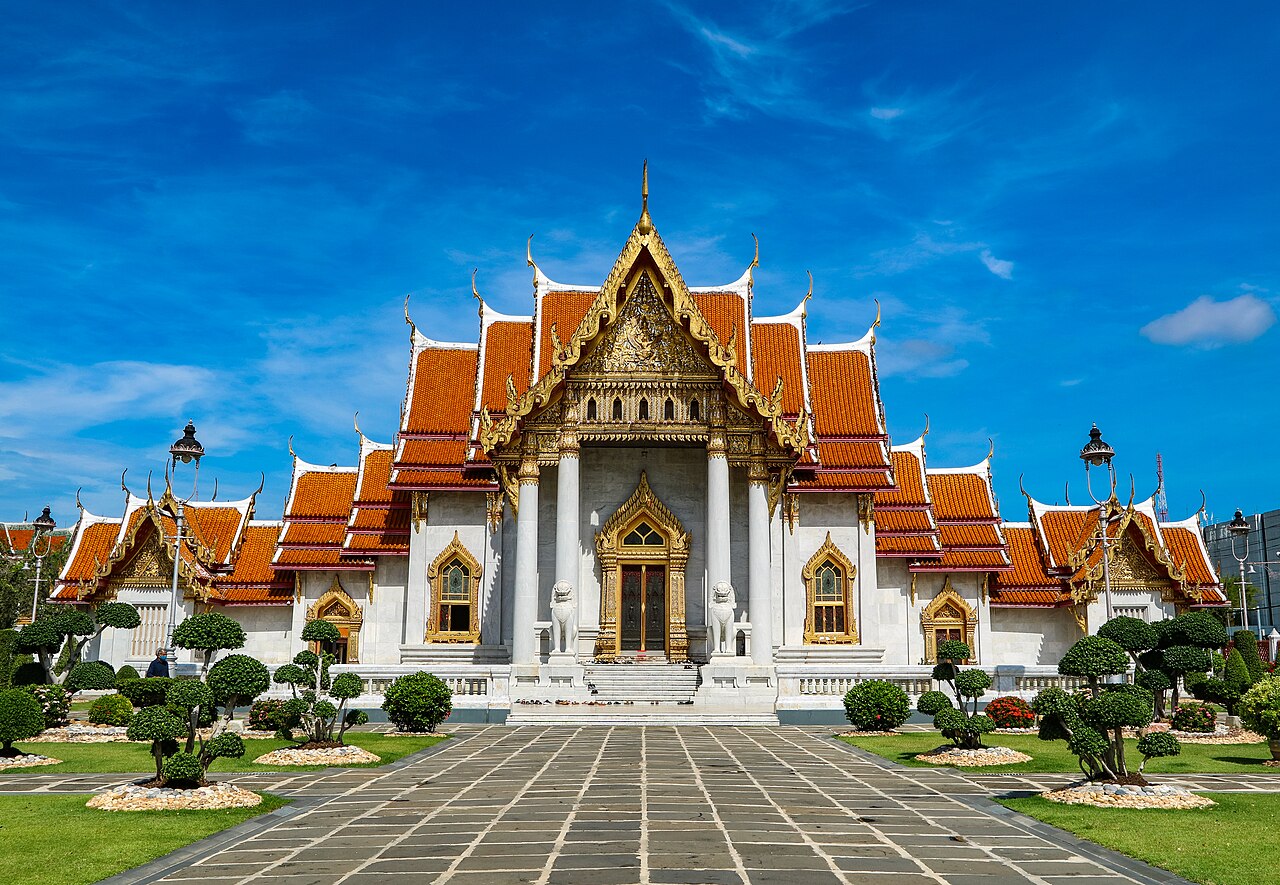
In the vibrant heart of Bangkok lies a profound testament to spiritual devotion and architectural ingenuity: Wat Benchamabophit Dusitwanaram Ratchawarawihan, more affectionately known as the Marble Temple. This venerable sanctuary stands not merely as a landmark but as a beacon of Buddhist philosophy, offering solace and reflection amidst its pristine grounds.
The Vision of a Modern Monarch: King Chulalongkorn (Rama V)
The genesis of Wat Benchamabophit traces back to the progressive reign of King Chulalongkorn (Rama V), one of Thailand’s most revered monarchs. As he embarked on the modernization of Siam during the late 19th and early 20th centuries, King Rama V envisioned a grand temple to serve the Dusit Palace area, reflecting a harmonious blend of traditional Thai aesthetics and contemporary Western influences. Construction began in 1899 and was largely completed by 1909, cementing its place as a pivotal cultural and spiritual project of the era.
The temple was built to replace two older temples in the area which were demolished to make way for the new Dusit Palace. It was intended as his own personal royal temple, a grand dedication to the spiritual heart of his modernized kingdom.
An Architectural Symphony: The Carrara Marble Temple
What truly distinguishes Wat Benchamabophit is its breathtaking use of Carrara marble, imported directly from Italy. This pristine white stone forms the very fabric of its main structures, lending the temple an ethereal glow and the nickname “Marble Temple.” The architectural style is a captivating fusion of traditional Thai multi-tiered roofs, ornate gables adorned with gilded chofahs and Nagas, and intricate window and door frames, all harmoniously integrated with elements reminiscent of European classical design.
-
The Ubosot (Ordination Hall)
The central Ubosot, or ordination hall, is the crowning jewel. Its elegant façade, symmetrical layout, and the serene Buddha image within embody a sense of perfect balance and spiritual purity. The hall’s interior is equally striking, with polished marble floors reflecting the soft light and creating an atmosphere conducive to deep contemplation.
-
The Phra Phutthachinnarat Replica
Housed within the Ubosot is a magnificent replica of the Phra Phutthachinnarat, one of Thailand’s most revered Buddha images, originally from Wat Phra Si Rattana Mahathat in Phitsanulok. This posture of subduing Mara represents enlightenment and unwavering resolve, serving as the central object of veneration and inspiration for practitioners.
The Gallery of Buddhas: A Journey Through Buddhist Art
One of the temple’s most unique and spiritually enriching features is the cloister surrounding the Ubosot, which houses a remarkable collection of 52 Buddha images. These images, collected by Prince Damrong Rajanubhab under King Chulalongkorn’s directive, represent various Mudras (hand gestures), postures, and artistic styles from different periods of Thai and regional Buddhist art history. They offer a visual treatise on the evolution of Buddhist iconography and serve as a profound meditation on the diverse manifestations of the Awakened One.
Each statue, carefully curated, invites visitors to reflect on the multifaceted path to enlightenment, illustrating the universal appeal and timeless wisdom of the Dhamma.
Symbolism, Serenity, and Spiritual Practice
Wat Benchamabophit is more than a display of opulent architecture; it is a living temple where the Sangha (monastic community) resides and practices. The tranquil courtyards, the meticulous landscaping, and the reflective pools contribute to an ambiance of deep serenity, inviting practitioners and visitors alike to slow down, observe, and engage in mindfulness.
The temple embodies core Buddhist principles: the purity of the white marble reflects the clarity of the Dhamma, the harmonious blend of styles speaks to adaptability and unity, and the dedicated space for monastic life underscores the importance of the spiritual path. It serves as a constant reminder of the impermanence of existence and the potential for inner peace.
An Enduring Legacy and Cultural Icon
Today, Wat Benchamabophit remains a vibrant center for Buddhist rituals, ceremonies, and study. It is not only a UNESCO World Heritage Tentative Site but also features prominently on the reverse side of the Thai five-baht coin, symbolizing its profound importance to the nation’s cultural and spiritual identity.
Visiting Wat Benchamabophit is an opportunity to step into a realm of peace and profound beauty, to witness the legacy of a visionary king, and to experience the timeless wisdom embedded in every marble facet. It stands as an enduring masterpiece, gracefully bridging past and present, tradition and innovation, all in the service of spiritual awakening.
Frequently Asked Questions (FAQ) & Key Concepts
Q: What is Wat Benchamabophit also known as?
Wat Benchamabophit is widely known as the Marble Temple due to its extensive use of white Italian Carrara marble in its construction.
Q: Who built Wat Benchamabophit and why?
It was built by King Chulalongkorn (Rama V), Thailand’s fifth monarch, as his royal temple for the Dusit Palace area, combining traditional Thai and European architectural styles.
Q: What kind of marble is used in its construction?
The temple’s primary building material is high-quality Carrara marble, imported directly from Italy, contributing to its distinctive pristine appearance.
Q: What is the significance of the Buddha image collection?
The temple houses a unique gallery of 52 Buddha images, representing various Mudras, postures, and artistic styles from different periods, offering a comprehensive view of Buddhist iconography and history.
Q: How does Wat Benchamabophit reflect Thai Buddhist philosophy?
Its serene atmosphere, the purity of the marble, and the meticulous design reflect principles of clarity, harmony, and mindfulness, providing a sacred space for spiritual practice and contemplation of the Dhamma.
Q: Is Wat Benchamabophit still an active temple?
Yes, Wat Benchamabophit remains an active and revered Buddhist temple, serving as a residence for the Sangha (monastic community) and a center for religious ceremonies and study.