
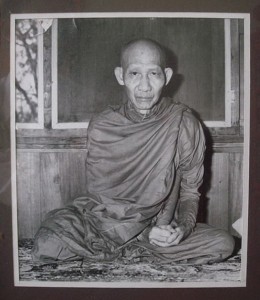
In the serene northern province of Lampang, amidst verdant landscapes and ancient Lanna traditions, a spiritual giant once walked a path of unparalleled austerity and profound wisdom. Luang Phor Kasem Khemako (พระครูเกษมเขมโก), reverently known as the Ascetic Saint of Lampang, was a monk whose life exemplified the highest ideals of detachment, diligence, and the pursuit of inner truth. His journey from noble lineage to a life of renunciation and solitary practice offers an enduring beacon for those seeking genuine spiritual understanding.
The Noble Renunciation: From Royalty to Robes
Born Chao Kasem Na Lampang on November 28, 1912, Luang Phor Kasem descended from the illustrious Chao Chet Ton (Seven Princes) royal family of Lampang. This lineage granted him a life of privilege and worldly comfort. However, from a young age, his heart yearned not for temporal power, but for the profound tranquility of the Dhamma. At the age of 15, he entered the monkhood as a novice at Wat Bunyuen and was fully ordained as a monk at Wat Chedi Sao Lang at the age of 21, receiving the monastic name Khemako, meaning “one who is secure and free from danger.”
His renunciation was not merely a change of attire but a radical redirection of his entire being. He consciously chose to abandon all societal expectations and personal comforts, embarking on a path that few dare to tread – the rigorous discipline of a true ascetic.
The Path of Austerity: Dhutanga and Forest Dwelling
Luang Phor Kasem’s spiritual journey was defined by his unwavering commitment to Dhutanga (ธุดงค์) practices, a set of thirteen austere disciplines prescribed in Buddhism to purify the mind and detach from worldly desires. For decades, he lived a life of extreme simplicity and solitude:
- Forest Dwelling: He spent extensive periods in dense forests, remote caves, and even charnel grounds, places traditionally associated with accelerating spiritual insight through confrontation with impermanence.
- Limited Possessions: He possessed only the bare necessities: three robes, an alms bowl, a water filter, and a small sleeping mat.
- One Meal a Day: Adhering strictly to eating only once a day, consuming whatever was offered during his alms round.
- Continuous Meditation: His days and nights were devoted to intense meditation, cultivating mindfulness and profound wisdom in the face of nature’s elements.
This rigorous self-discipline was not for self-mortification, but a deliberate method to eradicate defilements, cultivate equanimity, and realize the ultimate truth of Nibbana. His physical surroundings were harsh, but his inner world grew increasingly refined and luminous.
Wisdom Through Silence and Example
Despite his profound spiritual attainments and the immense respect he garnered, Luang Phor Kasem remained humble and often silent. He taught not through elaborate sermons, but through his living example. His presence alone was said to exude a powerful aura of peace and compassion, often drawing thousands of devotees who sought his blessings and guidance.
When he did speak, his words were simple, direct, and deeply penetrating, emphasizing core Buddhist principles such as:
- Self-Reliance (Atta Hi Attano Natho): He continually stressed that liberation comes from one’s own efforts, urging devotees not to rely on external saviors but to cultivate their own inner wisdom.
- Mindfulness and Contentment: Teaching the importance of living in the present moment, being content with little, and understanding the impermanent nature of all phenomena.
- Merit-Making (Tam Boon): While encouraging good deeds, he often reminded people that the purest form of merit comes from a purified mind and selfless intention.
His unwavering focus on Dhamma, coupled with his remarkable journey, solidified his reputation as a true saint in the hearts of the Thai people.
Baramee and the Enduring Legacy
Luang Phor Kasem’s spiritual power, known as Baramee (บารมี – perfections or spiritual accumulated merit), was legendary. Though he never sought fame or recognition, his profound virtue attracted people from all walks of life. Devotees believed that simply being in his presence or receiving his blessing could bring immense merit, protection, and good fortune.
His renowned **Phra Kreuang** (พระเครื่อง) or Buddhist amulets, created from various sacred materials, are highly cherished. These amulets are not seen as mere magical talismans, but as tangible reminders of his teachings, imbued with his blessings, inspiring wearers to cultivate mindfulness and virtuous conduct. They serve as a focal point for remembrance of the Dhamma and the merits of the great master.
Luang Phor Kasem Khemako passed away on January 15, 1996, at the age of 83. His physical form is preserved at Susaan Trailak (สุสานไตรลักษณ์), his cremation grounds in Lampang, which remains a revered pilgrimage site. Here, devotees continue to pay respects, meditate, and reflect on the profound teachings embodied by his life. His legacy is not just in the stories of his asceticism or the power of his amulets, but in the timeless message he imparted: the path to true liberation lies within, through diligent practice, unwavering detachment, and boundless compassion.
Frequently Asked Questions (FAQ) & Key Concepts
Q: Who was Luang Phor Kasem Khemako?
Luang Phor Kasem Khemako was a highly revered Thai Buddhist monk from Lampang, known for his extraordinary ascetic practices (Dhutanga) and profound spiritual wisdom.
Q: What is the significance of his ascetic practice (Dhutanga)?
His commitment to Dhutanga practices—living in forests, consuming one meal a day, and maintaining minimal possessions—was crucial for purifying his mind, cultivating detachment, and attaining deep spiritual insights, serving as a powerful example of Buddhist discipline.
Q: Where did Luang Phor Kasem reside and pass away?
Luang Phor Kasem resided primarily in the forests and eventually at Susaan Trailak in Lampang, where he passed away and where his preserved body remains a site of veneration.
Q: What are Luang Phor Kasem’s teachings known for?
His teachings emphasized self-reliance (Atta Hi Attano Natho), mindfulness, contentment, and the importance of inner purity over external rituals, delivered often through his silent example and simple, direct words.
Q: What is “Baramee” in the context of Luang Phor Kasem?
Baramee refers to the accumulated spiritual perfections or merit of Luang Phor Kasem, which manifest as a powerful spiritual aura, attracting devotees seeking his blessings and guidance due to his immense virtue and purity.