
“For those who wish to explore beyond material legends, this study examines the historical reality, textual lineages, and collector debates surrounding Siam’s most revered master.”
Few figures loom as large in the Thai Buddhist imagination as Somdej Phra Buddhachan Toh Brahmaramsi (1788–1872), known to almost everyone simply as Somdej Toh. A scholar-monk, meditation master, royal preceptor, poet, and the maker of the most revered amulet in Thailand, he has been venerated for more than 150 years as the kingdom’s best-loved “saintly monk.” The study below traces his life from a contested birth on a river boat to his death as the most senior monk of the early Rattanakosin era, then turns to the amulets, the collector debates, and the persistent myths — separating what the historical record supports from the cherished legend that surrounds his name.
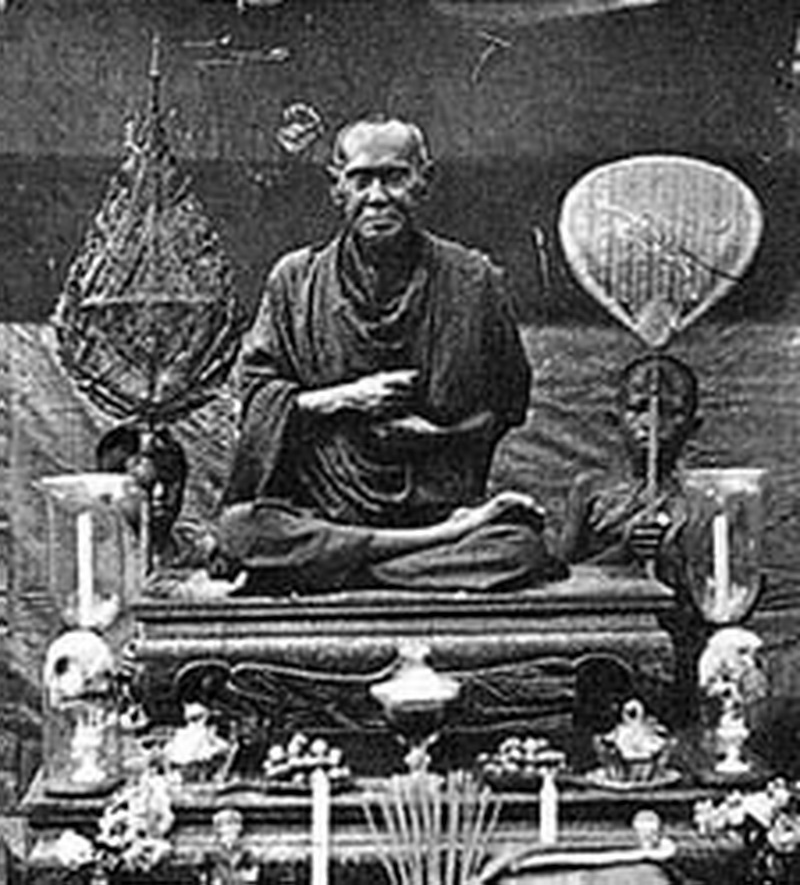
I. Identity, Naming, and Monastic Lineage
Somdej Toh is known by several names depending on the historical and religious context. Documenting his precise identity is crucial for distinguishing primary historical records from later folklore:
| Attribute | Thai Script | Sanskrit / Pali Etymology & Context |
|---|---|---|
| Lay Name | โต (Toh) | Meaning “Great” or “Large” in Thai. Given at birth due to his robust size. |
| Monastic Chaya | พรหมรังสี | Brahmaramsī (Sanskrit: Brahma-raṃsī), meaning “The Radiance of Brahma” or “Divine Radiance”. |
| Highest Monastic Title | สมเด็จพระพุฒาจารย์ | Somdej Phra Buddhācārya, meaning “The Great Teacher/Preceptor of the Buddha”. |
| Ecclesiastical Title Path | พระธรรมกิตติ → พระเทพกระวี → สมเด็จพระพุฒาจารย์ | Appointed Phra Thammakitti (1852), elevated to Phra Thep Krawi (1854), and finally promoted to Somdej Phra Buddhachan (1864) by King Rama IV. |
Biographical Timeline: Born on April 17, 1788 (B.E. 2331) at Ban Kai Chan, Tha Luang, Ayutthaya Province. He was ordained as a Samanera (novice monk) in 1800 (B.E. 2343) under Phra Bowon Wiriyathaen, eventually moving to Wat Mahathat in Bangkok for advanced Pali studies. He received full Bhikkhu (monk) ordination in 1807 (B.E. 2350) under Somdej Phra Sangharaj (Suk) as his preceptor, with royal sponsorship from King Rama I.
Somdej Toh passed away on June 22, 1872 (B.E. 2415) at Wat Bang Khun Phrom (now Wat Intharawihan), Bangkok, at the age of 84, having spent 64 rains in the monastic order.
II. The Life and Times of Somdej Toh
Somdej Toh lived through one of the most transformative eras of Siamese history, spanning the reigns of the first five monarchs of the Chakri Dynasty (Rattanakosin Period). His monastic career was marked by extraordinary royal relationships and deep spiritual independence.
The Royal Bloodline Belief: A persistent and much-loved narrative holds that Somdej Toh was the out-of-wedlock son of a Chakri monarch. Precision matters here: his father is not named in any official record, and the earliest biographies disagree on the candidate. The version compiled by Phraya Thipkosa identifies King Rama I (while still Chao Phraya Chakri, before his accession), whereas the accounts attributed to Phra Khru Kanlayananukul and the collector-scholar Triyampavai identify King Rama II (Prince Isarasundhorn at the time of Toh’s birth). Both biographies explicitly state that this royal parentage is a village tradition rather than a documented fact. His mother was a commoner, recorded variously as Ket (เกศ), Ngud (นางงุด), or Kesonkham. Whatever the truth, the belief in royal blood is commonly invoked to explain the extraordinary personal attention, royal sponsorship, and access to elite education he received from his youth.
The Middle Path of Practice: Unlike many contemporary monks who chose either urban scholarship (Ganthadhura) or remote forest asceticism (Vipassanadhura), Somdej Toh famously blended both. He was a master of Pali scriptures and royal diplomacy, yet spent decades wandering the deep jungles of Siam as a forest monk (Tudong). During the reign of King Rama III, he consistently refused high ecclesiastical titles and administrative duties, fleeing the capital into provincial jungles whenever promotions were imminent to maintain his spiritual solitude.
Teacher to the Future King: Somdej Toh’s standing in history was secured long before he held any grand title. When Prince Mongkut—the future King Rama IV—entered the monkhood, where he would remain for twenty-seven years, he received his early grounding in the Dhamma and monastic discipline (Vinaya) from Phra Toh, who served as his senior “elder-brother monk.” That bond of teacher and royal pupil explains the unusual trust the king later placed in him: Rama IV is remembered as wanting near the palace a monk fearless and selfless enough to tell a king when he was wrong.
Decades in the Forest: Through much of the reign of King Rama III (1824–1851), Somdej Toh withdrew from the capital altogether. He spent years as a wandering forest monk (thudong), travelling on foot through the remote provinces of Siam—and, by tradition, beyond its borders—giving himself to meditation rather than ecclesiastical advancement. The withdrawal was deliberate: he slipped away whenever offers of rank drew near, and accepted high office only once his former pupil sat on the throne and could no longer be easily refused.
Abbot of Wat Rakhang: In 1852 (B.E. 2395), King Rama IV (King Mongkut)—who had spent 27 years as a monk himself and deeply respected Toh’s intellectual and meditative caliber—persuaded him to accept the position of Abbot of Wat Rakhang Kositaram (“The Temple of the Bell”). He used this platform not to amass political power, but to teach the Dhamma to all classes of society, from the royal family to humble canal boatmen.
Final Years and Passing: In his last years Somdej Toh devoted himself to one final great work: a colossal standing Buddha, Luang Pho To (Phra Si Ariya Mettrai), at Wat Bang Khun Phrom Nai—today’s Wat Intharawihan. He did not live to see it finished. He passed away on the temple’s old pavilion on 22 June 1872, in his eighty-fifth year, with the towering image then raised only as far as its navel. Later generations completed it, and the giant Buddha still stands in Bangkok—a monument to the monk who began it.
III. Achievements and Lasting Legacy
Because his amulets are so famous, it is easy to forget how much Somdej Toh accomplished as a teacher, builder, and public figure. His legacy rests on far more than the small clay tablets that carry his name.
- A master preacher and poet of the Dhamma. He was celebrated across Siam for the wit, clarity, and beauty of his sermons, using Thai verse and vivid imagery to bring Buddhist teaching within reach of ordinary people. His sayings—and his gentle, often humorous deflations of pomposity—were collected and are still repeated today.
- Spiritual advisor to the throne. As former preceptor to King Rama IV and a venerated elder into the reign of King Rama V, he held a rare position: close enough to the court to counsel kings, yet independent enough to speak plainly to them.
- A great builder of Buddha images. Beyond the standing Buddha at Wat Intharawihan, he is associated with monumental images and restoration works at temples including Wat Ket Chaiyo in Ang Thong (a giant seated Buddha) and Wat Sa Tue in Ayutthaya. Raising such images demanded enormous resources and devotion, and testifies to the influence he commanded.
- Reviver of the Chinnabanchorn. By rediscovering, refining, and tirelessly chanting the ancient Chinnabanchorn gatha, he rescued a fading text from obscurity and made it one of the most widely recited prayers in Thailand—arguably his most far-reaching contribution to everyday devotional life.
- A model of humility. Despite holding one of the highest ranks in the Sangha, he remained famously approachable, simple in his habits, and generous to those in need—qualities that, as much as any miracle story, explain why he is still so deeply loved.
IV. The Chinnabanchorn Gatha: A Spiritual Masterpiece
A critical pillar of Somdej Toh’s spiritual legacy is his refinement of the Chinnabanchorn Gatha (Jinapañjara Gāthā or “The Armor of the Buddha”).
While later legends attribute the chant’s creation entirely to Somdej Toh, historical and academic research (including Chulalongkorn University and Lanna text archives) reveals that the mantra has ancient roots. It is believed to have been composed in Lanna (Northern Thailand) or Sri Lanka around the 15th to 16th century. Somdej Toh discovered this ancient Pali text, edited it for grammatical and rhythmic perfection, and popularized it across Siam. The clearest evidence that he did not author it comes from the tradition itself: when he chanted the gatha before King Rama IV, the king admired its beauty and asked whether Toh had composed it. Toh replied that he had not—it was an old text from the North that he had revised and shortened, and that the Sri Lankan original was longer still.
The chant acts as an invocation of spiritual armor, metaphorically placing 28 historical Buddhas, key Arahants (such as Sariputta, Moggallana, and Ananda), and the holy Buddhist scriptures around the practitioner’s body. To collectors, the spiritual efficacy of a Phra Somdej amulet is inextricably linked to the daily recitation of the Chinnabanchorn, activating the sacred powders embedded within the clay.
V. Myths, Misinformation, and Corrections
Few Thai monks have attracted as much legend as Somdej Toh, and much of what circulates online—on amulet sites, social media, and even encyclopedias—blends solid history with folklore and outright error. Separating the two does not diminish him; if anything, the documented record is more impressive than the embellishments. Here are the claims most often repeated, set against what the reliable sources actually say.
- Myth: “Somdej Toh wrote the Chinnabanchorn.” He did not compose it. The gatha is an older Pali text of Lanna and Sri Lankan lineage; his role was to revise, shorten, and popularize it. By the tradition’s own account, when King Rama IV asked whether he had written it, Toh answered that he had not—it was an old Northern text he had adapted. He is the reviver and populariser, not the author.
- Myth: “He was certainly the illegitimate son of King Rama II.” His father is unrecorded. The royal-parentage story is folk tradition, and the early biographies do not even agree on which king—one names Rama I (while still Chao Phraya Chakri), another Rama II. Both present it as village hearsay rather than documented fact.
- Myth: “He was born in Kamphaeng Phet” (or Thonburi). The reliable record places his birth at Ban Kai Chan, Tha Ruea District, in Ayutthaya Province. Kamphaeng Phet appears only in some northern-lineage legends connected to his mother.
- Myth: “The title ‘Somdej’ means he had royal blood, and only royals could make amulets.” “Somdej” is an ecclesiastical rank conferred by the king—the highest grade of monk below the Supreme Patriarch—not a marker of royal birth. The amulet “Phra Somdej” is named after that title. No rule ever reserved amulet-making for royalty.
- Myth: “Any old ‘Somdej’-style amulet is one of his.” Powder amulets in the “Somdej” style were made by many monks at many temples—before, during, and long after his lifetime. Only specific provenances, chiefly Wat Rakhang, Wat Bang Khun Phrom, and Wat Ket Chaiyo, are attributed to his era, and even those are authenticated case by case. The market is saturated with later copies and outright fakes.
- Myth: “He subdued the ghost Mae Nak Phra Khanong.” This is a beloved folk legend—dramatised in countless films—not a documented episode of his life. It is worth telling as folklore, but it is not biography.
- Myth: “He made his famous amulets as a young monk.” Mainstream scholarship dates the celebrated Wat Rakhang amulets to the last years of his life, roughly 1866–1872. Claims that he produced them in his youth belong to devotional tradition rather than collector consensus.
- Confused dates. He was born in 1788 (B.E. 2331), not 1776, and died in 1872 in his eighty-fifth year. Sources giving other years are simply mistaken.
VI. The Phra Somdej Amulet: Powders, Authentication, and Debate
The amulet that carries Somdej Toh’s title — the Phra Somdej, the “King of Thai Amulets” — is a large subject in its own right. In brief: the tablets are pressed from a shell-lime paste enriched with five consecrated “sacred powders” (phong wiset) that Somdej Toh built up over decades of writing and erasing sacred formulae, later bound with Chinese tung (Tangyu) oil for durability. A famous tradition credits a royal goldsmith, Luang Vijarn Jayanurak, with carving the finest moulds — though no contemporary record of such an official has been found, and some researchers regard him as a later embellishment. And the modern market is split by a fierce authentication debate between the mainstream collectors’ association, which recognises only plain Wat Rakhang, Bang Khun Phrom and Ket Chaiyo pieces, and proponents of the ornate “Wang Na” (Front Palace) amulets that the mainstream rejects as later fabrications.
Because these are collector questions rather than questions about the monk’s life, the full treatment — the five powders one by one, the Wang Na controversy in detail, the three great lineages, and the classic moulds (pims) — lives in our dedicated guide: Phra Somdej: The King of Thai Amulets — A Collector’s Guide.
VII. Legends and Folklore: The Storm and the Ghost
Alongside the documented record sits a body of beloved stories that Thais tell about Somdej Toh as folklore rather than biography. They are worth recounting because they reveal why his image still radiates protective power for ordinary devotees — but, as the corrections above make clear, they belong to devotional tradition, not to the historical sources.
Calming the storm. In one cherished tale, Somdej Toh is summoned back to Bangkok by King Rama IV and travels by boat. A violent storm rises on the river; standing at the prow, he calms the wind and waves with a gesture and a prayer, and the water falls still. The story is told to illustrate the serenity and spiritual mastery attributed to him, not as a dated historical event.
Subduing Mae Nak Phra Khanong. The most famous legend connects him to one of Thailand’s best-known ghost stories. Mae Nak, a young woman who died in childbirth, is said to have refused to leave her living husband, her vengeful spirit terrorising the Phra Khanong district until Somdej Toh finally subdued and pacified her. Retold endlessly in film and television, the episode has fused the monk and the ghost in the popular imagination — so much so that the scholar Justin McDaniel pairs this “lovelorn ghost” and “magical monk” to explain how lived Thai Buddhism actually works. As biography, however, it is folklore: no contemporary record places Somdej Toh at the events the legend describes.
VIII. Primary Sources and Academic References
To construct a rigorous, objective study of Somdet Toh, researchers rely on the following primary and academic resources:
- Historical Biography of Somdet Toh (B.E. 2473 / 1930): Compiled by **Phraya Thipkosa (Son Lohanan / สอน โลหนันทน์)**. This is the oldest formal, printed biographical compilation, capturing oral traditions from direct disciples of the late 19th century.
- Thammasat University Digital Library (Cremation Volume Archive): Digital copy `dc:6061` and `dc:6064` preserving early monastic records and biographies of the Rattanakosin era.
- Chulalongkorn University Thesis Database: Detailed academic studies on the history, translation, and modern revival of the *Jinapañjara* (Chinnabanchorn) chant in modern Thailand.
- Srinakharinwirot University Research: “Semiotics of Phra Somdej: Decoding Buddhist Art and Socio-Cultural Meanings” (Wibunma et al., 2012). An academic study analyzing the structural iconography of Phra Somdej amulets.
- NIDA Institutional Archives (September 2023): Official document releasing the historical donation of the Somdet Toh amulet chest by General Napol Boontap, citing the Palm-Leaf manuscripts of Luang Pu Kham.
Frequently Asked Questions (FAQ) & Key Concepts
Q: Who was Somdet Toh?
Somdej Phra Buddhachan Toh Brahmaramsi (1788–1872) was one of the most revered Buddhist masters of Thailand’s Rattanakosin era. He served as the Abbot of Wat Rakhang Kositaram, edited and popularized the sacred Chinnabanchorn Gatha, and hand-consecrated the legendary Phra Somdej amulets, widely considered the “King of Thai Amulets.”
Q: What are the five sacred powders used in Phra Somdej?
The core material of a genuine Phra Somdej consists of five sacred chalk powders prepared meditatively by Somdet Toh: Pong Pattamang (for invulnerability), Pong Ittijae (for Metta / attraction), Pong Maharaj (for charisma and leadership), Pong Buddhakhun (for general protection and merit), and Pong Trinisinghe (for defense against dark forces and illnesses).
Q: What is the Chinnabanchorn (Jinapañjara) Gatha?
The Chinnabanchorn Gatha is a powerful protective chant of ancient Lanna or Sri Lankan origin. Refined and popularized by Somdet Toh, it acts as a spiritual armor by conceptually placing historical Buddhas, great disciples (Arahants), and core Buddhist teachings around the reciter to ward off all dangers and bring peace.
Q: Why are “Wang Na” (Front Palace) amulets controversial?
The “Wang Na” or “Wat Phra Kaew” amulets are highly controversial because mainstream commercial dealers (such as the Amulet Association of Thailand) do not accept them, citing a lack of court records, modern chemical materials in some specimens, and anachronistic calendar stamps (like “B.E. 2411” stamped on the back during an era that did not use that format). Conversely, alternative collectors believe they are authentic, high-class relics made exclusively for royal coronation events and kept secretly in palace vaults, and they claim commercial cartels reject them only to maintain a monopoly over artificial scarcity.
Q: Did Luang Vijarn Jayanurak really carve the molds for Somdet Toh?
Traditional collectors believe Luang Vijarn Jayanurak was a royal goldsmith who carved the most balanced and beautiful late-period molds of Wat Rakhang and introduced Tangyu oil as a binder. However, skeptical modern historians have found no record of this name in royal registers, and the portrait associated with him actually depicts a different official, indicating that his character may be a mid-20th-century market myth.