
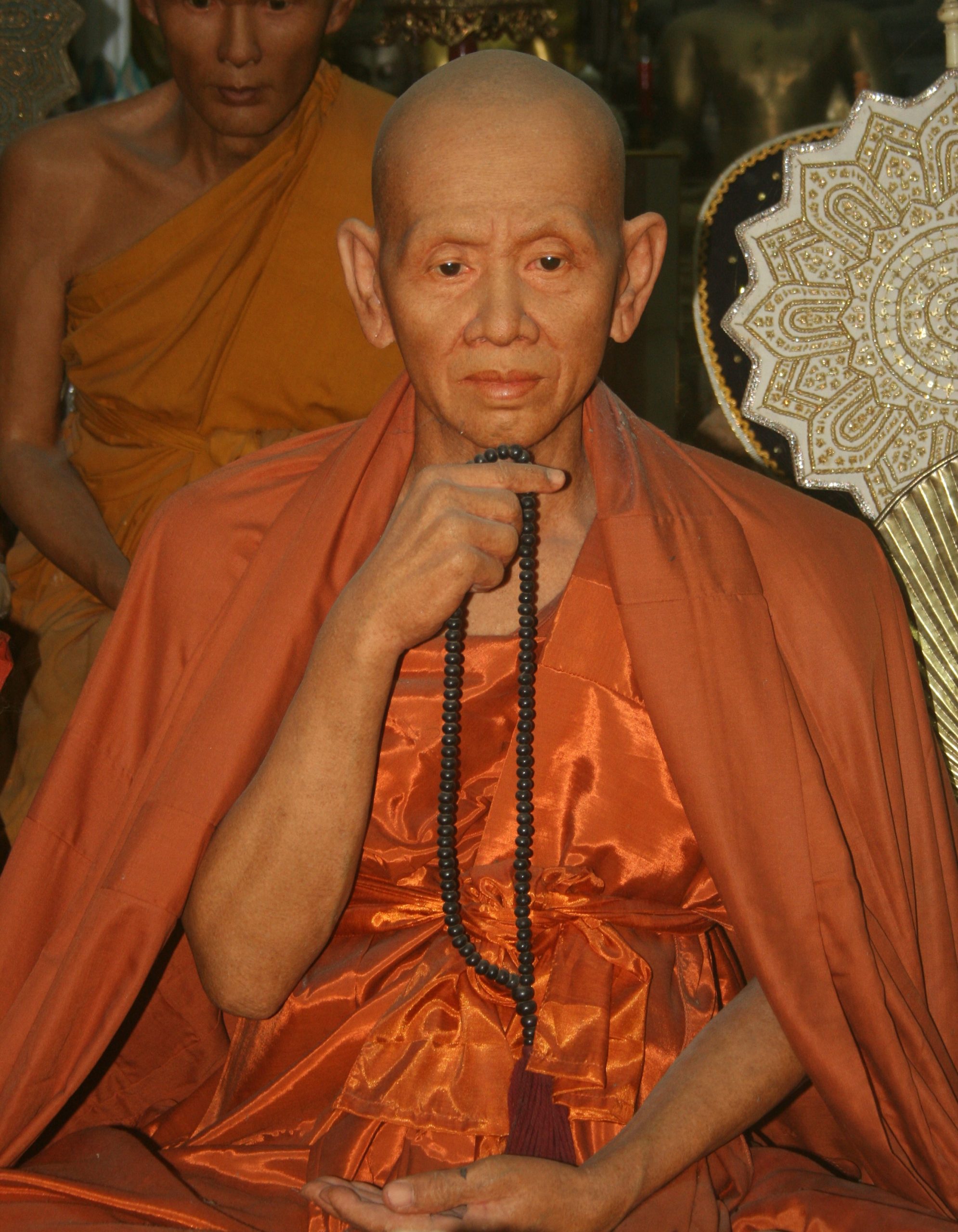
In the tranquil, mist-shrouded mountains of Northern Thailand, a name resonates with profound reverence and spiritual awe: Kruba Srivichai (ครูบาศรีวิชัย). Often hailed as “The Saint of Lanna,” his life (1878-1938) stands as a monumental testament to unwavering faith, selfless compassion, and an extraordinary capacity for community upliftment. He was not merely a monastic figure but a spiritual architect who revitalized the ancient Buddhist traditions of the Lanna Kingdom, leaving behind a legacy of restored temples, improved infrastructure, and an indelible imprint on the hearts of millions.
The Dawn of a Dhamma Luminary
Born In-Fae (อินท์เฟย์) in the village of Ban Pang, Lamphun province, Kruba Srivichai’s early life hinted at a destiny far grander than his humble beginnings. From a young age, he displayed exceptional intelligence and an inclination towards spiritual inquiry. He entered the monastic order as a novice at the age of 18, receiving the ordination name Srivichai, meaning “Victorious Glory.” His teachers quickly recognized his deep understanding of the Buddhist scriptures and his profound commitment to the Vinaya (monastic discipline).
A Vow of Austerity and Public Service
Kruba Srivichai’s monastic path was marked by a strict adherence to the *dhutanga* practices—austere observances designed to cultivate detachment and spiritual purity. He famously vowed to never consume meat, alcohol, or fermented foods, and always wore robes patched from discarded cloth, symbolizing humility and non-attachment. These practices earned him immense respect and established his reputation as a monk of exceptional spiritual fortitude.
Beyond personal asceticism, Kruba Srivichai felt a deep responsibility towards the welfare of the Sangha and the lay community. He observed the deteriorating state of ancient Lanna temples, many of which had fallen into disrepair after centuries. This realization sparked his life’s mission: to preserve and restore the spiritual heritage of Lanna.
The Great Builder and Unifier
What truly distinguished Kruba Srivichai was his unparalleled ability to inspire and mobilize people for large-scale public works. He initiated and oversaw the restoration or construction of over one hundred temples, chedis (stupas), bridges, and roads across Northern Thailand. His approach was simple yet profoundly effective: he would invite local villagers, regardless of their social standing or wealth, to contribute their labor, materials, or donations—a practice known as Sattang Wat (สัทธังวัด), or ‘temple construction based on faith’.
The Road to Wat Phra That Doi Suthep: A Monumental Undertaking
His most celebrated achievement is undoubtedly the construction of the twelve-kilometer road leading up to the revered Wat Phra That Doi Suthep in Chiang Mai. For centuries, pilgrims had endured an arduous journey up the mountain. In 1935, at the age of 57, Kruba Srivichai declared his intention to build a proper road. Despite skepticism and the formidable terrain, he rallied thousands of volunteers who, armed with basic tools, worked tirelessly for five months and twenty-two days to complete the path. This monumental feat exemplified his power to unite communities through shared faith and purpose, transcending social barriers and demonstrating immense practical skill alongside spiritual leadership.
Challenges and Enduring Faith
Kruba Srivichai’s immense popularity and independent approach, which sometimes bypassed official Sangha hierarchies established by the centralized Thai government in Bangkok, occasionally led to conflicts. He faced accusations and even trials, being summoned to Bangkok on several occasions to explain his practices and initiatives. Yet, his unwavering composure, profound Dhamma knowledge, and the immense public support he commanded ultimately led to his vindication. These challenges only strengthened the resolve of his followers and solidified his image as a virtuous monk persecuted for his pure intentions.
The Legacy of Lanna’s Saint
Kruba Srivichai passed away peacefully in 1938, but his spirit and legacy endure. He is not merely remembered as a builder, but as a sage who emphasized the essence of Dhamma: compassion, generosity, mindfulness, and the cultivation of inner peace. His life serves as a beacon, reminding practitioners of the transformative power of a dedicated life lived in service to others and the Triple Gem.
Today, shrines dedicated to Kruba Srivichai stand prominently throughout Northern Thailand, most notably at the foot of Doi Suthep, where pilgrims pay their respects before ascending to the temple. His image, often depicted with a gentle smile and serene gaze, inspires countless individuals to walk the path of virtue and contribute to the well-being of their communities. He truly is The Saint of Lanna, a timeless embodiment of Buddhist ideals.
Frequently Asked Questions (FAQ) & Key Concepts
Q: Who was Kruba Srivichai?
Kruba Srivichai (1878-1938) was a highly revered Thai Buddhist monk from the Lanna Kingdom (Northern Thailand), widely celebrated for his spiritual purity, extensive public welfare projects, and revitalization of ancient temples.
Q: Why is he called ‘The Saint of Lanna’?
He earned the title ‘The Saint of Lanna’ due to his profound spiritual wisdom, unwavering commitment to monastic discipline, compassionate service to communities, and his extraordinary ability to inspire thousands to participate in large-scale temple and infrastructure building projects.
Q: What was his most famous construction project?
His most famous and monumental undertaking was the construction of the 12-kilometer road leading up to the revered Wat Phra That Doi Suthep in Chiang Mai, completed in just over five months by thousands of volunteers.
Q: What is the significance of *dhutanga* practice in his life?
*Dhutanga* practices, which are austere observances, were central to Kruba Srivichai’s spiritual discipline, reflecting his deep commitment to detachment, simplicity, and purity, and earning him immense respect from both monastics and lay followers.
Q: What is *Sattang Wat*?
*Sattang Wat* refers to Kruba Srivichai’s unique method of mobilizing communities for temple construction and public works, inviting people to contribute labor, materials, or donations based purely on their faith and goodwill, rather than financial obligation.
Q: How did Kruba Srivichai impact Lanna culture?
Kruba Srivichai deeply impacted Lanna culture by revitalizing its Buddhist traditions, restoring numerous ancient temples, fostering a strong sense of community cooperation, and preserving a distinct Lanna identity amidst increasing centralization from Bangkok.
Q: What spiritual lessons can be learned from Kruba Srivichai?
From Kruba Srivichai, one can learn the power of selfless service, the importance of unwavering faith, the virtue of austerity, and the ability to inspire unity and collective effort through compassionate leadership and a pure heart.