
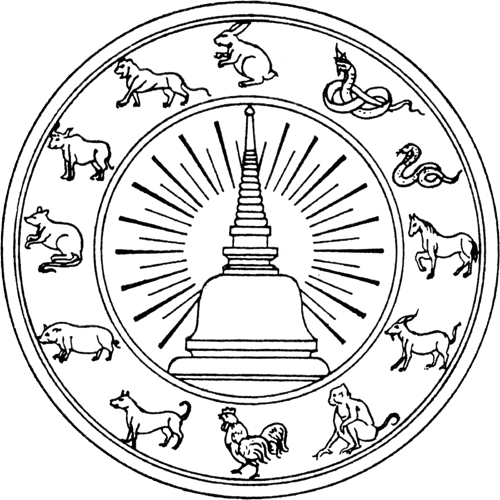
In the heart of Southern Thailand, nestled within the ancient city of Nakhon Si Thammarat, lies the genesis of one of the Buddhist world’s most revered and enigmatic amulets: Phra Jatukam Ramathep. Far more than a mere charm for fortune, this sacred artifact embodies centuries of spiritual heritage, intricate symbolism, and a profound connection to the Dhamma. Its story is a tapestry woven with historical legends, devoted individuals, and the enduring power of faith, inviting practitioners to look beyond material desires and towards deeper spiritual understanding.
The Ancient Roots: Guardians of Srivijaya
The origins of the figures depicted in Jatukam Ramathep amulets trace back to the glorious era of the Srivijaya Empire, a powerful maritime thalassocracy that flourished across Southeast Asia from the 7th to the 13th centuries. Nakhon Si Thammarat, then known as Tambralinga, was a significant center of this empire, deeply influenced by Mahayana Buddhism and Hinduism.
Legend speaks of two princely guardians, Jatukam and Ramathep, who were believed to be sons of King Chandrabhanu of Srivijaya. Their roles were to protect the city, its people, and the sacred relics, particularly the esteemed Phra Borommathat Chedi at Wat Mahathat Woramahawihan. These figures evolved into revered deities, symbolizing protection, justice, and prosperity, deeply embedded in the local spiritual landscape long before the modern amulet phenomenon.
The Modern Revival: A Vision for Wat Mahathat
The modern era of Phra Jatukam Ramathep began in the 1980s, primarily through the vision and unwavering dedication of Police Major General Phantarak Rajadej (often reverently referred to as “Khun Phan”). A highly respected and spiritual police officer known for his mastery of traditional magic and deep Buddhist faith, Khun Phan sought to raise funds for the restoration and preservation of Wat Mahathat Woramahawihan, the principal Buddhist temple in Nakhon Si Thammarat and a national treasure.
Under his guidance, the first official series of Jatukam Ramathep amulets was created. These were not initially intended for widespread commercial gain but as a means to inspire merit-making (Tam Boon) and participation in the temple’s revitalization project. The designs incorporated ancient symbolism, drawing from Dvaravati and Srivijaya art, imbued with powerful consecration rituals by revered monks and Khun Phan himself. The initial intent was pure: to protect the Dhamma and preserve a sacred site for future generations.
Symbolism and Spiritual Significance
The design of a typical Jatukam Ramathep amulet is rich with profound symbolism, reflecting a blend of Buddhist cosmology, astrology, and ancient iconography:
- Jatukam and Ramathep: Often depicted as regal, benevolent figures, symbolizing protection, leadership, and the upholding of righteousness.
- Rahu: A central and prominent feature on many amulets, Rahu is a mythical astrological deity associated with eclipses. In Thai Buddhist tradition, venerating Rahu is believed to absorb negative energy, ward off misfortune, and bring about transformation and positive change.
- The Twelve Zodiac Animals: Encircling the central figures, these represent the continuous cycle of life, time, and karma. They symbolize the universal forces at play and the intricate connections within existence.
- Eight Directions (Paed Tid): Often depicted, these signify all-encompassing protection and blessings from every corner of the universe.
- The Wheel of Dhamma (Dhammachakra): A fundamental Buddhist symbol, representing the Buddha’s teachings and the path to enlightenment.
Each element serves as a reminder of deeper spiritual truths, encouraging the wearer to reflect on their own actions, intentions, and place within the cosmic order.
Beyond the Phenomenon: The True Essence
The widespread popularity of Phra Jatukam Ramathep amulets reached an unprecedented peak in the mid-2000s, becoming a cultural phenomenon that transcended traditional Buddhist practice. While this brought attention and resources to Wat Mahathat, it also led to commercialization and speculation, sometimes overshadowing the amulet’s original spiritual intent.
However, for devoted practitioners, the true essence of Jatukam Ramathep remains rooted in the principles of Dhamma. The amulet is not a magical charm that grants wishes without effort. Instead, it serves as a powerful focal point for:
- Mindfulness (Sati): A constant reminder to live consciously and ethically.
- Pure Intention (Jit Jai): Emphasizing that the efficacy of any sacred object is tied to the sincerity and moral conduct of the individual.
- Merit-Making (Tam Boon): Encouraging generosity, compassion, and actions that generate positive karma.
- Spiritual Protection: Offering solace and strength through faith, helping individuals navigate life’s challenges with resilience.
The veneration of Jatukam Ramathep is ultimately an act of faith, a commitment to one’s spiritual path, and a respect for the cultural and religious heritage it represents. Its miracles are not just external manifestations but internal transformations born from a pure heart and adherence to Buddhist teachings.
An Enduring Legacy
Today, Phra Jatukam Ramathep amulets continue to be revered, their allure transitioning from a fleeting trend back to a respected spiritual artifact. They stand as a testament to Nakhon Si Thammarat’s rich history, the profound impact of individuals like Police Major General Phantarak Rajadej, and the enduring power of Buddhist wisdom. To truly appreciate Jatukam Ramathep is to understand its role as a sacred conduit, guiding devotees towards introspection, virtuous living, and the eternal quest for peace and enlightenment.
Frequently Asked Questions (FAQ) & Key Concepts
Q: What is Phra Jatukam Ramathep?
Phra Jatukam Ramathep refers to a category of sacred Buddhist amulets originating from Nakhon Si Thammarat, Thailand, highly revered for spiritual protection, prosperity, and connection to ancient Srivijaya guardian figures.
Q: Who are Jatukam and Ramathep?
Jatukam and Ramathep are legendary princely guardians believed to be sons of a Srivijaya king, tasked with protecting the ancient city of Tambralinga (Nakhon Si Thammarat) and its sacred Buddhist relics.
Q: What is the significance of Nakhon Si Thammarat to these amulets?
Nakhon Si Thammarat, an ancient Srivijaya stronghold, is the birthplace of these amulets, particularly linked to the revered Wat Mahathat Woramahawihan temple, which their modern creation aimed to restore.
Q: What role did Police Major General Phantarak Rajadej play?
Police Major General Phantarak Rajadej (Khun Phan) was instrumental in popularizing and overseeing the creation of modern Jatukam Ramathep amulets, primarily to raise funds for the restoration of Wat Mahathat temple in the 1980s.
Q: What symbolism is commonly found on Jatukam Ramathep amulets?
Common symbolism includes the figures of Jatukam and Ramathep, the mythical deity Rahu, the twelve zodiac animals representing cycles of time, and eight directions signifying all-encompassing protection, all deeply rooted in Buddhist and astrological beliefs.
Q: What is the true spiritual purpose of venerating Phra Jatukam Ramathep?
The true spiritual purpose is to serve as a reminder for mindfulness, encourage pure intentions and merit-making, foster spiritual protection through faith, and connect practitioners to the rich Buddhist heritage and the teachings of the Dhamma.