
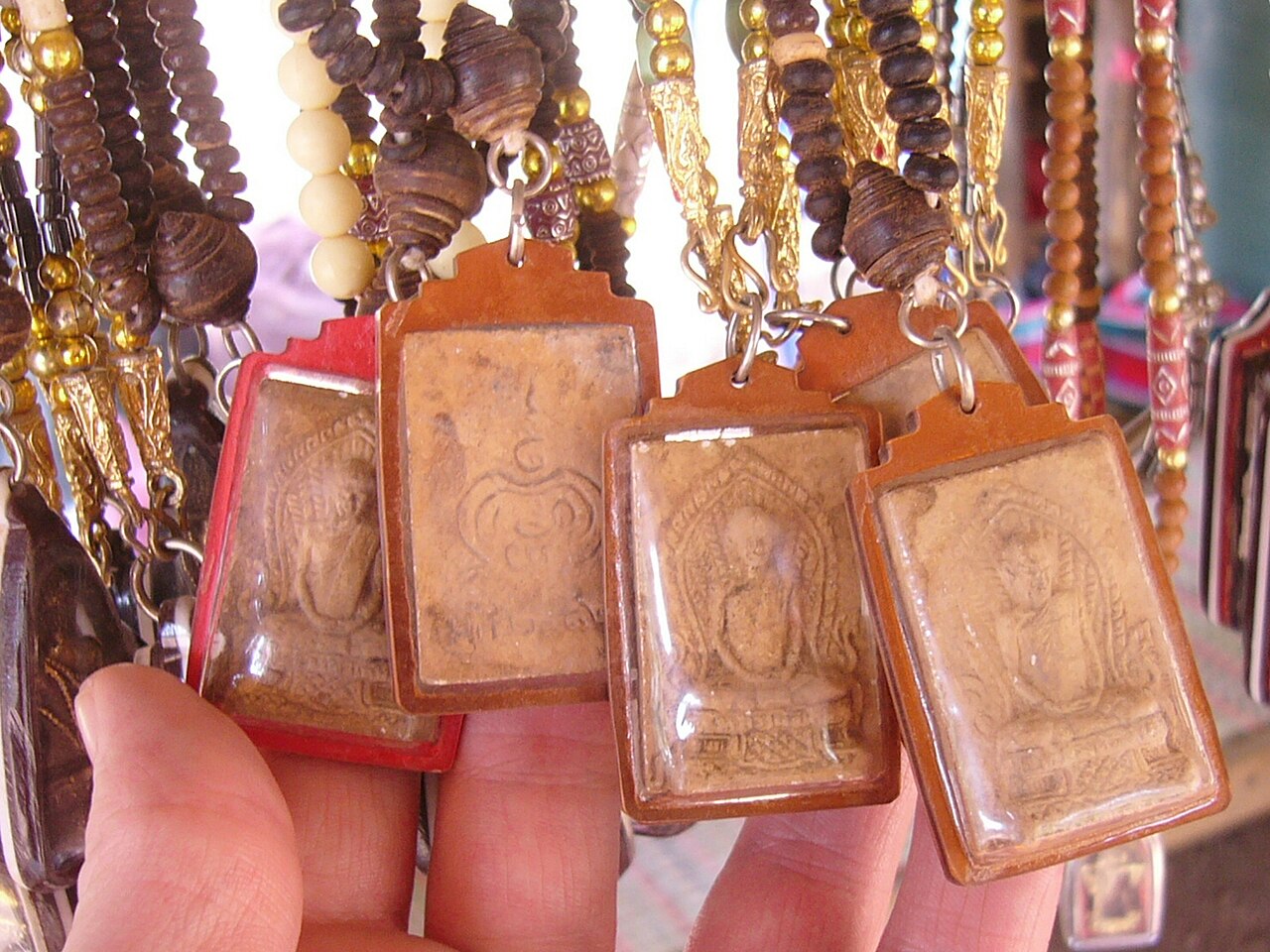
In the tranquil heart of Thailand’s spiritual landscape lies a profound heritage, embodied in artifacts that transcend mere artistry to become conduits of ancient wisdom and blessings. Among these, the **Phra Phong Suphan** amulet stands as a luminous beacon, not only as a testament to centuries of devout craftsmanship but also as a cherished member of the revered Benjapakee—the quintet of Thailand’s most sacred and powerful amulets. Hailing from the historic province of Suphan Buri, this clay masterpiece offers a silent narrative of faith, protection, and the enduring legacy of the Buddha’s teachings.
A Glimpse into Antiquity: Origins and Discovery
The origins of **Phra Phong Suphan** trace back to the venerable Dvaravati and U Thong periods, spanning from the 7th to the 15th centuries CE, a time of significant Buddhist flourishing in the region. These sacred amulets lay hidden for centuries within the chedi (stupa) of **Wat Phra Si Rattana Mahathat** in Suphan Buri. Their rediscovery occurred in **2437 BE (1894 CE)** during restoration efforts led by local officials and monks.
The uncovering of these ancient treasures was a moment of profound spiritual and historical significance. King Rama V, deeply interested in preserving national heritage, subsequently visited the site, acknowledging the profound cultural and religious value of the findings. This royal recognition further cemented the amulet’s revered status.
The Essence of Clay: Material and Craftsmanship
Each **Phra Phong Suphan** amulet is a unique creation, meticulously hand-pressed from a sacred blend of clay, enriched with holy powders, medicinal herbs, and the residue of ancient offerings. This distinctive composition contributes to its earthy texture and a spectrum of hues, from light brown to dark grey, often displaying subtle red or greenish tinges. The presence of tiny, mineral-like particles within the clay adds to its authentic charm.
A hallmark of these amulets is the intricate detail despite their small size. The impression of the artisan’s thumbprint, visible on the reverse side of many pieces, serves as a poignant reminder of the direct human touch and devotional effort invested in their creation. There are several principal **”Pim” (molds or designs)**, the most famous often categorized by facial features: **Pim Nah Narian (divine face), Pim Nah Klang (middle face), and Pim Nah Gae (elderly face)**, each possessing subtle variations cherished by connoisseurs.
Iconography and Spiritual Symbolism
The central imagery of **Phra Phong Suphan** universally depicts the Buddha in the posture of **Pang Marn Vichai** (Subduing Mara), also known as Bhumisparsha Mudra. This iconic pose portrays the Buddha seated, with his right hand touching the earth, calling upon the Earth Goddess to bear witness to his enlightenment and his victory over Mara, the personification of temptation and defilement.
This powerful symbolism conveys:
- **Victory over Adversity:** A reminder of overcoming inner and outer obstacles on the path to spiritual awakening.
- **Unwavering Resolve:** The Buddha’s steadfast determination to achieve enlightenment.
- **Protection and Blessings:** The amulet is believed to imbue its bearer with spiritual protection, courage, and the ability to navigate life’s challenges with equanimity.
The overall aesthetic is one of serene dignity, with the Buddha often resting on a simple lotus pedestal, symbolizing purity and spiritual ascent.
The Prestige of the Benjapakee
The term **Benjapakee (เบญจภาคี)** translates to “The Five Great Amulets,” a classification reserved for Thailand’s most ancient, rare, and spiritually potent amulets. **Phra Phong Suphan** holds its esteemed place within this revered quintet alongside Phra Somdej Wat Rakang, Phra Rod Lamphun, Phra Nang Phaya Phitsanulok, and Phra Kring Naresuan. Its inclusion is attributed to several key factors:
- **Profound Antiquity:** Dating back centuries, it represents an early zenith of Buddhist art in Thailand.
- **Exceptional Spiritual Efficacy:** Believed to confer significant blessings, protection, and enhance spiritual fortitude.
- **Rarity and Historical Significance:** Its limited numbers and documented history contribute to its profound value.
- **Artistic Excellence:** The intricate craftsmanship, despite the simple materials, reflects a deep devotional art.
A Path to Mindfulness: Spiritual Reverence and Protection
For practitioners, **Phra Phong Suphan** is far more than an antique or a collector’s item; it is a sacred object intended to serve as a **Buddhanussati**—a constant reminder of the Buddha, Dhamma (teachings), and Sangha (community). Carrying or revering such an amulet is an act of faith, encouraging the development of mindfulness, compassion, and right conduct.
The spiritual benefits attributed to **Phra Phong Suphan** are vast and deeply cherished:
- **Metta Mahaniyom (Compassion and Charm):** Fostering good relationships and benevolent interactions.
- **Klaew Klaad (Protection from Harm):** Safeguarding against dangers, accidents, and negative influences.
- **Kongkrapan Chatri (Invulnerability):** Enhancing resilience and fortitude.
- **Serm Duang (Fortune and Destiny):** Promoting good luck and auspicious circumstances.
However, the true power of the amulet is believed to reside not merely in the object itself, but in the pure intentions and virtuous conduct of the individual who reveres it. It is a tool for spiritual growth, inspiring the bearer to live a life aligned with Buddhist principles.
Preserving a Legacy
The enduring reverence for **Phra Phong Suphan** reflects a deep cultural and spiritual connection to Thailand’s Buddhist heritage. While its rarity and history contribute to its significant market value, its ultimate worth remains spiritual—an irreplaceable link to the past and a continuous source of inspiration for present and future generations. The preservation and respectful study of these sacred amulets ensure that their legacy, and the profound wisdom they embody, continue to illuminate the path for sincere practitioners.
Frequently Asked Questions (FAQ) & Key Concepts
Q: What is Phra Phong Suphan?
Phra Phong Suphan is a revered ancient Thai Buddhist clay amulet, originating from Suphan Buri province, known for its spiritual potency and historical significance as one of the “Benjapakee” or Five Great Amulets.
Q: What does “Benjapakee” signify in the context of Thai amulets?
“Benjapakee” (เบญจภาคี) refers to a highly prestigious grouping of the five most ancient, rare, and spiritually powerful Thai Buddhist amulets, symbolizing the pinnacle of amulet craftsmanship and sacred blessings.
Q: What are the primary spiritual benefits attributed to Phra Phong Suphan?
The amulet is believed to confer a range of spiritual benefits including protection (Klaew Klaad), invulnerability (Kongkrapan Chatri), compassion and charm (Metta Mahaniyom), and enhanced fortune (Serm Duang), fostering overall well-being and spiritual growth.
Q: Where was Phra Phong Suphan originally discovered?
Phra Phong Suphan amulets were discovered within the chedi (stupa) of Wat Phra Si Rattana Mahathat in Suphan Buri province during restoration work in 2437 BE (1894 CE).
Q: What materials are typically used to create Phra Phong Suphan?
These amulets are traditionally crafted from a sacred blend of local clay, potent medicinal herbs, holy powders, and ancient offerings, pressed by hand into various molds.
Q: What is the main Buddha posture depicted on Phra Phong Suphan?
The amulet universally depicts the Buddha in the **Pang Marn Vichai** (Subduing Mara) posture, signifying the Buddha’s enlightenment and his victory over temptations and defilements.