
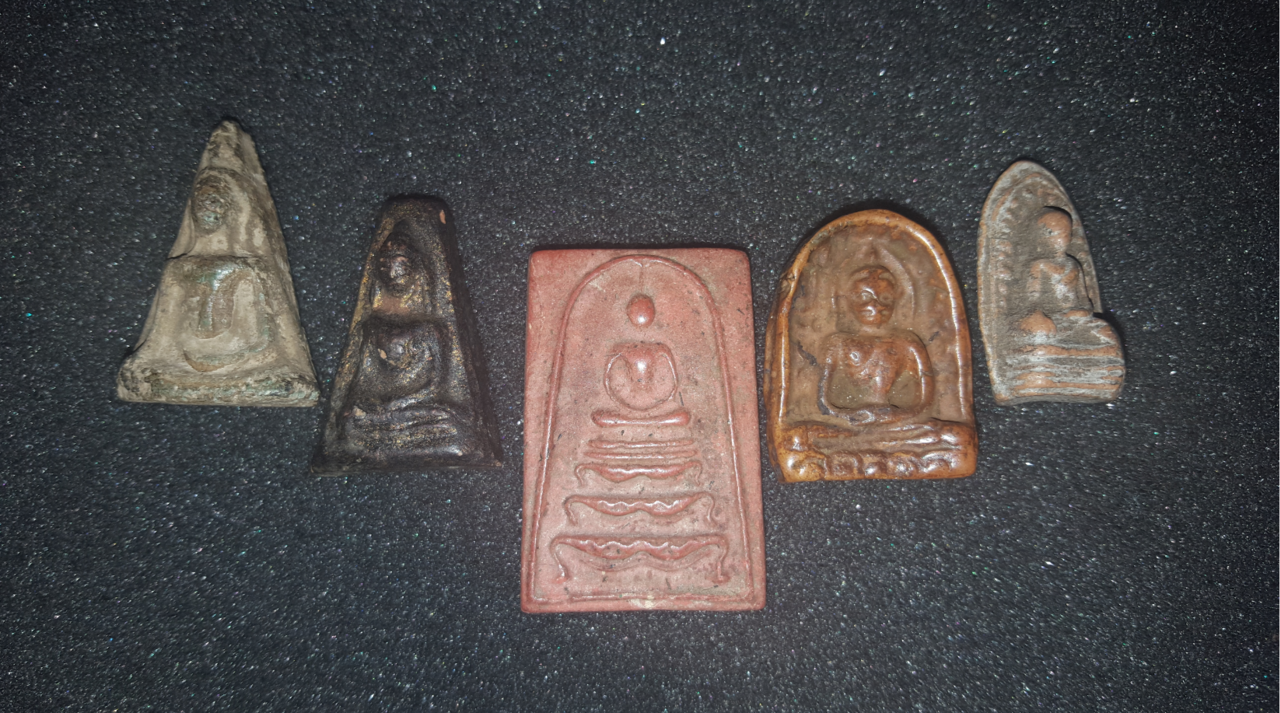
In the tranquil northern reaches of Thailand, nestled within the verdant embrace of the Ping River valley, lies **Lamphun**, a province steeped in history and spiritual profundity. From this ancient land emerges **Phra Rod**, an amulet revered across generations, not merely as a relic of the past, but as a potent symbol of protection, resilience, and the possibility of divine escape – known in Thai as **Klaew Klad**.
The Sacred Origins: Wat Mahawan and Hariphunchai
The story of **Phra Rod** is inextricably linked with **Wat Mahawan**, an esteemed temple in **Lamphun** believed to be the primary site where these ancient clay votive tablets were discovered. While the precise origins are shrouded in the mists of time, historical consensus places their creation within the flourishing **Hariphunchai Kingdom**, an independent Mon Dvaravati kingdom that thrived from the 7th to the 13th centuries CE.
Legend credits **Queen Chama Thewi**, the revered founder of **Hariphunchai**, with bringing Buddhism and sophisticated Dvaravati art and culture to the region. It is believed that during her reign, or shortly thereafter, artisans crafted these exquisite amulets, embedding within them the spiritual essence of early Buddhist practice in Southeast Asia. The materials – typically sacred clay mixed with various holy powders, pollen, and medicinal herbs – were carefully pressed into intricate molds, then fired or sun-dried, creating a durable and spiritually charged object.
Iconography and the Essence of Enlightenment
The distinctive image of **Phra Rod** depicts the Buddha in the Bhumisparsha Mudra, or “earth-touching gesture,” a moment of profound significance. This posture represents the instant of the **Buddha’s Enlightenment** under the Bodhi tree, when he called the Earth to witness his unwavering resolve and vanquished **Mara**, the tempter. This iconic representation imbues **Phra Rod** with a powerful symbolism:
- Victory over Adversity: Just as the Buddha triumphed over Mara’s illusions, the amulet signifies overcoming life’s challenges.
- Unwavering Resolve: It reminds practitioners to cultivate inner strength and steadfastness.
- Realization of Truth: The enlightenment posture points towards the ultimate goal of Buddhist practice – the understanding of **Dhamma**.
The Buddha figure is typically seated on a lotus base, flanked by two celestial beings or disciples, subtly rendered to preserve the focus on the central image. The simplicity and timeless quality of its design speak to its ancient lineage and spiritual depth.
Klaew Klad: The Divine Escape
The most celebrated attribute of **Phra Rod** is its reputation for **Klaew Klad** (แคล้วคลาด). This Thai term translates to “divine escape” or “avert misfortune.” It is the profound belief that the amulet offers protection from harm, helps one navigate away from danger, and allows for escape from perilous situations, accidents, and even negative karmic retribution. Devotees believe that wearing or revering **Phra Rod** with a pure heart and mindful intent can:
- Prevent Accidents: Safeguarding against physical harm.
- Avert Dangers: Guiding one away from potential threats, seen and unseen.
- Neutralize Negativity: Providing a spiritual shield against ill will or bad karma.
- Foster Calmness: Instilling a sense of peace even amidst turmoil, allowing for clear decision-making in critical moments.
This protective power is not seen as a magical charm operating outside the laws of **karma**, but rather as a catalyst. It is believed to amplify the wearer’s own accumulated **merit (bun)** and mindfulness, aligning them with auspicious circumstances that lead to safety.
Beyond Protection: Spiritual Resonance
While **Klaew Klad** is a primary draw, **Phra Rod** offers a deeper spiritual resonance. For many, it serves as a tangible connection to the ancient **Dhamma** and the enlightened path of the Buddha. Holding a **Phra Rod** is a reminder to cultivate:
- Mindfulness (Sati): To be present and aware, which itself is a form of protection.
- Compassion (Metta): To act with kindness, reducing the likelihood of generating negative karma.
- Wisdom (Panna): To discern right from wrong, leading to safer choices.
It encourages a daily practice of virtue, understanding that true protection stems from one’s own actions and mental states. The amulet acts as a focal point for devotion, inspiring practitioners to live in accordance with Buddhist principles, thereby naturally attracting blessings and harmony.
Authenticity, Reverence, and Modern Significance
Due to their age and spiritual value, genuine **Phra Rod** amulets, especially those unearthed from ancient chedis, are highly prized and can command significant value. However, the true worth lies not in monetary terms, but in the spiritual connection and the reverence shown. Acquiring a genuine piece requires discerning knowledge, often passed down through generations of collectors and experts.
Today, **Phra Rod** continues to be sought after by devotees, collectors, and those seeking spiritual solace. It stands as a testament to the enduring faith of the Thai people and a living link to the glorious **Hariphunchai Kingdom**. Whether for its reputation for **Klaew Klad** or its profound reminder of the Buddha’s path to enlightenment, **Phra Rod** remains a cherished emblem of peace, protection, and spiritual awakening.
Frequently Asked Questions (FAQ) & Key Concepts
Q: What is the primary spiritual purpose of Phra Rod?
The primary purpose of **Phra Rod** is to serve as a sacred reminder of Buddhist teachings, offering deep spiritual protection, mindfulness, and karmic blessings to practitioners who hold pure intentions.
Q: Where does Phra Rod originate from?
**Phra Rod** amulets originate from the ancient **Hariphunchai Kingdom** in present-day **Lamphun**, Thailand, with many believed to have been discovered at **Wat Mahawan**.
Q: What does “Klaew Klad” mean in relation to Phra Rod?
**Klaew Klad** (แคล้วคลาด) is a Thai term signifying “divine escape” or “aversion of misfortune,” referring to the belief that **Phra Rod** protects its wearer from dangers, accidents, and negative circumstances.
Q: What period are Phra Rod amulets from?
**Phra Rod** amulets date back to the **Hariphunchai Kingdom** period, roughly between the 7th and 13th centuries CE, making them among the oldest and most revered Thai amulets.
Q: What is the iconography of Phra Rod?
**Phra Rod** typically depicts the Buddha in the **Bhumisparsha Mudra** (earth-touching gesture), symbolizing his enlightenment and triumph over **Mara**, often seated on a lotus base with subtle attendant figures.
Q: Are Phra Rod amulets still relevant today?
Yes, **Phra Rod** amulets continue to be highly revered today, sought after by devotees for spiritual protection, inspiration, and their profound historical and cultural significance in Thai Buddhism.