
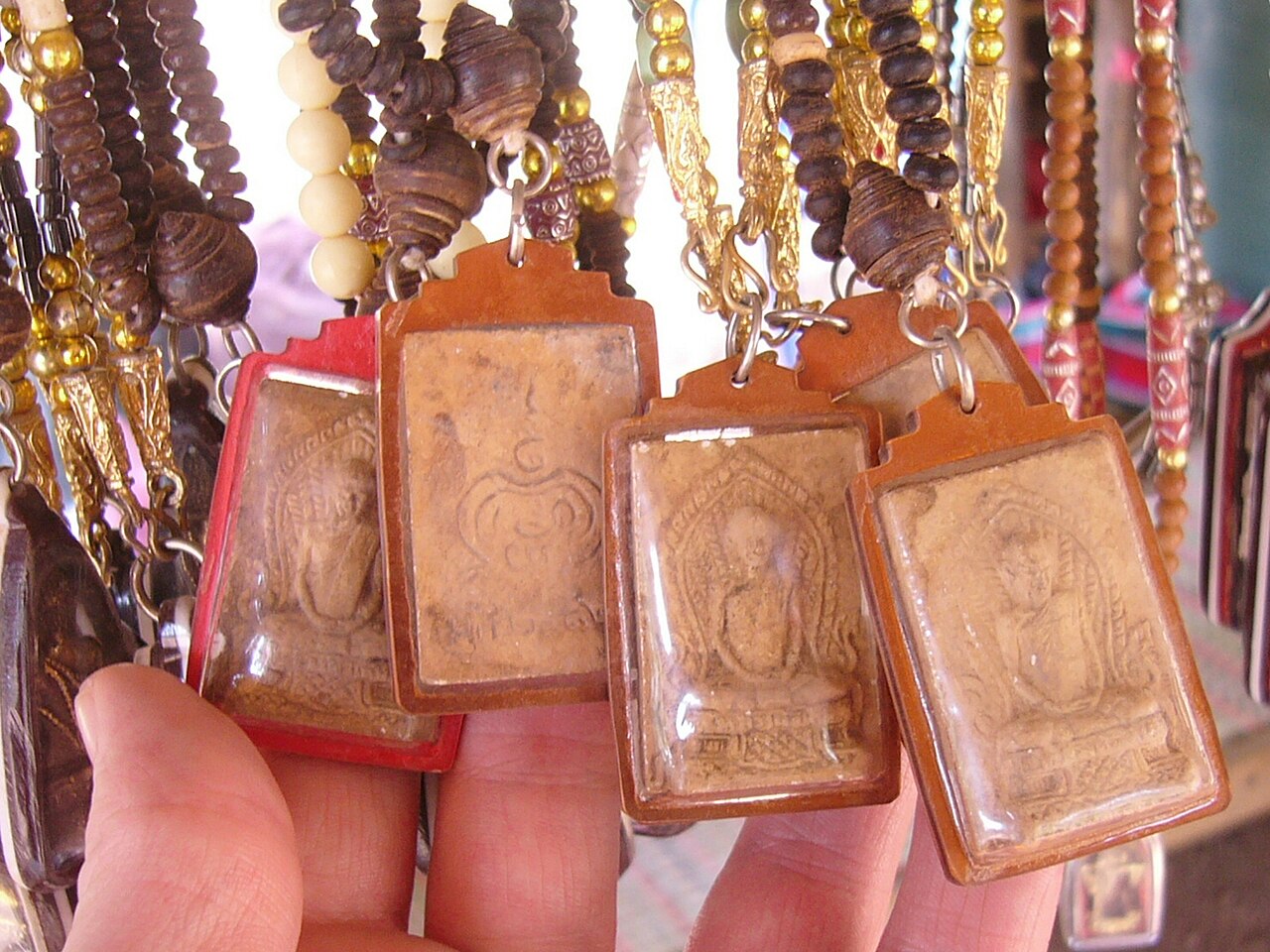
In the serene landscape of Thai Buddhist tradition, certain artifacts transcend mere artistry, becoming profound conduits of spiritual heritage. Among these, the **Phra Ruang** amulets from the ancient kingdoms of **Lopburi** and **Sukhothai** stand as venerated testaments to faith, craftsmanship, and a deep connection to the Dhamma.
These sacred objects are not merely collectors’ items; they are echoes of an enlightened past, embodying centuries of devotion and the protective blessings believed to emanate from the Buddha’s image. Understanding Phra Ruang requires a journey through Thailand’s historical and spiritual heartlands, where art, kingship, and Buddhism converged to create an enduring legacy.
The Genesis of Sacred Form: Lopburi Period Phra Ruang
The earliest widely recognized **Phra Ruang** amulets trace their origins to the **Lopburi period** (roughly 11th-14th centuries CE), a time when much of present-day Thailand was under the strong cultural and religious influence of the Khmer Empire. These amulets reflect the robust aesthetic of Khmer Buddhist art, characterized by powerful, often austere, and majestic forms.
-
Khmer Influence and Iconography
Lopburi Phra Ruang typically depict the Buddha in various postures, most commonly standing or seated, often with iconography reminiscent of the Mahayana Buddhist tradition prevalent during the Khmer era. The features are strong, with prominent eyebrows, thick lips, and a distinct *ushnisha* (cranial protuberance symbolizing wisdom). Many feature a flame-like aura emanating from the Buddha’s head, known as *rasamee*, signifying his enlightenment.
A notable characteristic is the **”Phra Ruang Nang”** (Sitting Phra Ruang) or **”Phra Ruang Yuen”** (Standing Phra Ruang) styles, often crafted from lead, tin, or ancient alloys. Their designs are usually minimalist yet impactful, focusing on the Buddha’s powerful presence. Some rare examples are “double-sided,” showing the Buddha on both front and back, increasing their perceived spiritual potency.
The Flourishing of Dhamma Art: Sukhothai Period Phra Ruang
With the rise of the **Sukhothai Kingdom** in the 13th century, a distinctively Thai artistic style began to emerge, characterized by grace, serenity, and idealized forms that perfectly encapsulated the Theravada Buddhist ideals of the time. The **Phra Ruang** amulets of this period beautifully illustrate this stylistic evolution.
-
Distinct Thai Aesthetic and Symbolism
Sukhothai Phra Ruang amulets showcase a more elongated, slender, and elegant Buddha image. The facial features are softer, often with a gentle smile, conveying profound inner peace and compassion. The flame *rasamee* becomes more prominent and refined, often appearing as a delicate, elegant flame above the *ushnisha*.
Common forms include the standing Buddha with one hand raised in the *abhaya mudra* (gesture of fearlessness) or both hands in the *vitarka mudra* (gesture of teaching and discussion). The **”Phra Ruang Rang Pern”** (Bullet-shaped Phra Ruang) is a famous Sukhothai variation, depicting the Buddha in a slender, elongated form, often standing, and crafted from ancient lead or tin alloys. These amulets are revered for their aesthetic beauty and their profound spiritual presence, reflecting the golden age of Thai Buddhism under kings like Ramkhamhaeng.
Imbuing the Sacred: Craftsmanship and Consecration
The creation of **Phra Ruang** amulets was a sacred endeavor, deeply interwoven with ritual and reverence. The process was as important as the final form, ensuring the amulet was not merely an object, but a vessel of spiritual energy.
-
Materials and Techniques
The primary materials used were humble yet potent: **lead** and **tin**, often mixed with other ancient metals to create unique alloys. Sometimes, baked clay (พระเครื่องเนื้อดิน *Phra Khrueng Nuea Din*) was also used. The crafting techniques, such as **lost-wax casting** or direct molding, required immense skill and precision. Each amulet, whether intricately detailed or elegantly simple, was a testament to the artisan’s devotion.
-
The Power of Pluk Sek
Central to the spiritual potency of **Phra Ruang** (and indeed, all Thai amulets) is the ritual of **Pluk Sek** (consecration). Performed by highly revered monks, often within sacred temple grounds, these ceremonies involve chanting, meditation, and blessings to imbue the amulets with protective powers (*buddhakun*) and auspicious energies. This transformative process elevates the metal or clay form into a sacred object, a receptacle for merit and Dhamma.
The Heart of Devotion: Spiritual Significance
**Phra Ruang** amulets are held in immense reverence for their perceived spiritual benefits, extending far beyond mere superstition. They are understood as tools for cultivating mindfulness and receiving blessings.
-
Protection (Klaew Klaad, Kongkraphan Chatri)
One of the most sought-after aspects is **protection**. Devotees believe Phra Ruang amulets offer **Klaew Klaad** (avoidance of danger and harm) and **Kongkraphan Chatri** (invulnerability to weapons). This protective quality is not magical in a simplistic sense, but rather stems from the belief that the purity of the Buddha’s image and the merit accumulated by the consecrating monks create a spiritual shield for the wearer.
-
Auspiciousness (Metta Mahaniyom)
Beyond protection, Phra Ruang are also believed to bestow **Metta Mahaniyom** (loving-kindness and popularity), fostering harmonious relationships and attracting goodwill. They are seen as aids for success in endeavors, enhancing one’s aura of benevolence and approachability.
-
Mindfulness and Dhamma Connection
Ultimately, the deepest spiritual significance lies in their role as a **sacred reminder**. Carrying a Phra Ruang amulet serves as a constant prompt to live by the Dhamma, to practice mindfulness, cultivate compassion, and uphold ethical conduct. The amulet becomes a tangible link to the Buddha’s teachings, encouraging the wearer towards a path of peace and wisdom.
A Legacy Preserved: Respect and Understanding
Today, **Phra Ruang** amulets remain highly sought after, both for their historical value and profound spiritual meaning. Genuine artifacts are rare and carry significant cultural weight. When engaging with these sacred objects, it is paramount to approach them with respect, understanding, and an appreciation for their deep cultural and religious context.
Their enduring presence is a testament to the strength of Thai Buddhist faith and the timeless appeal of the Buddha’s message. From the powerful forms of Lopburi to the serene elegance of Sukhothai, Phra Ruang amulets continue to be cherished as venerable links to Thailand’s spiritual heritage.
Frequently Asked Questions (FAQ) & Key Concepts
Q: What exactly is Phra Ruang?
Phra Ruang refers to ancient Thai Buddhist amulets, primarily originating from the Lopburi and Sukhothai periods, depicting the image of the Buddha and highly revered for their spiritual significance and historical value.
Q: What are the key differences between Lopburi and Sukhothai Phra Ruang amulets?
Lopburi Phra Ruang typically exhibit robust, austere, and Khmer-influenced artistic styles, while Sukhothai Phra Ruang are characterized by a more slender, graceful, and serenely idealized Thai aesthetic with distinct flame-like halos.
Q: What spiritual benefits are associated with Phra Ruang amulets?
Devotees believe Phra Ruang amulets offer profound spiritual protection (Klaew Klaad, Kongkraphan Chatri), foster loving-kindness and popularity (Metta Mahaniyom), and serve as a constant reminder to practice the Dhamma and cultivate mindfulness.
Q: What materials were typically used to create Phra Ruang amulets?
Phra Ruang amulets were predominantly crafted from ancient lead, tin, or their alloys, and occasionally from baked clay (Nuea Din). The choice of material often depended on the available resources and specific artistic traditions of the era.
Q: How should one respectfully care for a Phra Ruang amulet?
Phra Ruang amulets should be treated with utmost reverence, stored in a clean, elevated place, and handled with clean hands. They are sacred objects meant to inspire devotion and ethical conduct, not mere collectibles.
Q: Why are Phra Ruang amulets considered culturally significant in Thailand?
Phra Ruang amulets are culturally significant because they represent a tangible link to Thailand’s rich Buddhist heritage, showcasing the evolution of sacred art, reflecting historical influences, and embodying the enduring faith of the Thai people.