
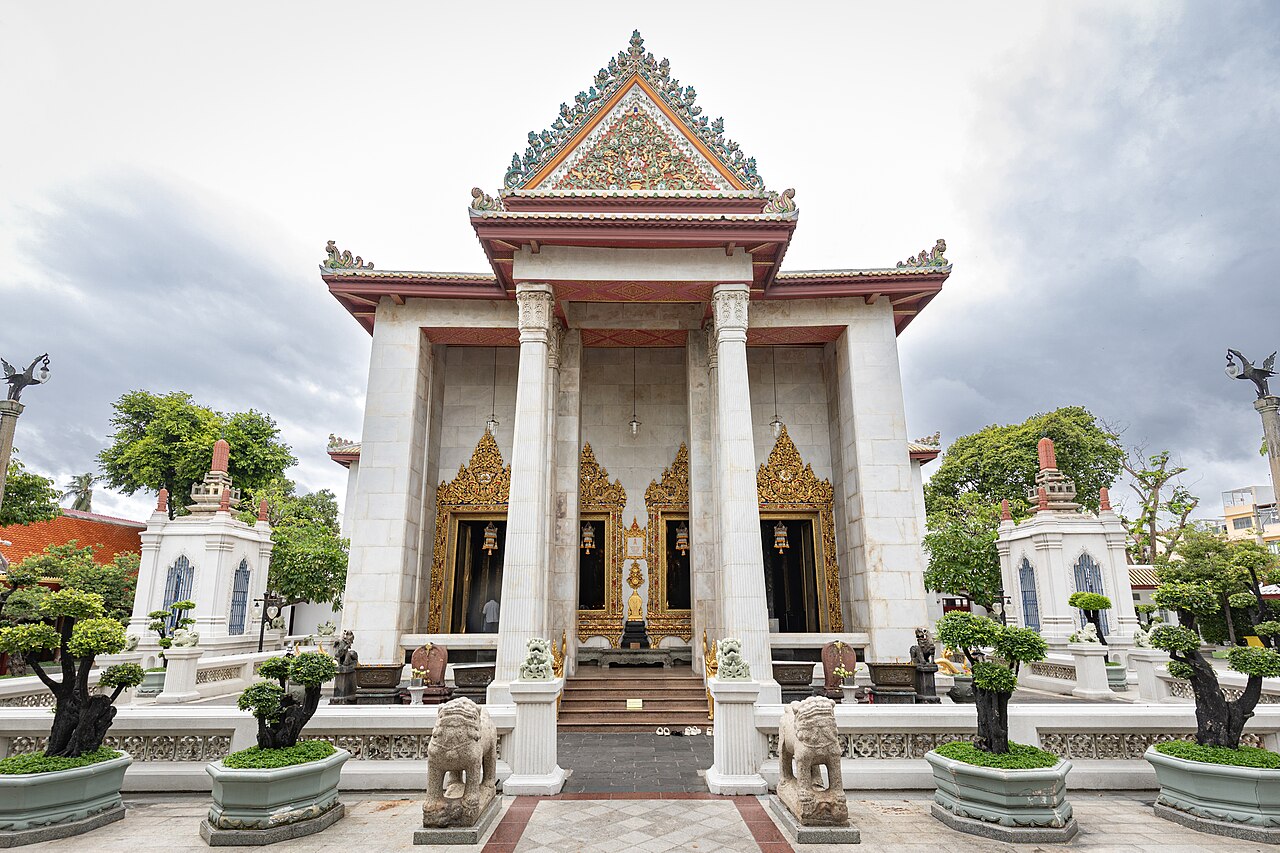
In the heart of bustling Bangkok lies a sanctuary of profound spiritual and historical significance: Wat Bowonniwet Vihara. More than just a temple, it is a living chronicle of Thai monarchy, a crucible of Buddhist reform, and a revered center of intellectual pursuit. For centuries, this sacred ground has intertwined with the very fabric of the nation, nurturing kings, shaping doctrine, and guiding countless seekers on the path of Dhamma.
A Royal Foundation and the Genesis of Reform
The origins of Wat Bowonniwet Vihara trace back to the reign of King Rama III (Phra Nang Klao Chaoyuhua) in 1829. Initially known as Wat Mai, its true destiny began to unfold when Prince Mongkut, who would later ascend to the throne as King Rama IV (Phra Chom Klao Chaoyuhua), took up residence as a monastic here in 1836. During his 27 years in monkhood, Prince Mongkut initiated a transformative reform movement within Thai Buddhism, emphasizing stricter adherence to the Vinaya (monastic discipline) and a deeper, more scholarly understanding of the Pali canon.
This reform gave rise to the Dhammayuttika Nikaya, a new order of monks that sought to purify Buddhist practice and return to its original essence. Wat Bowonniwet Vihara thus became the spiritual and intellectual epicenter of this movement, laying the groundwork for a more rigorous and scholarly approach to the Dhamma that continues to influence Thai Buddhism today.
The Ordination Place of Kings and Scholars
One of Wat Bowonniwet Vihara’s most distinctive and profound roles is its unique connection to the Thai monarchy. It has served as the temporary monastic residence and ordination temple for numerous Thai kings and royal princes, a tradition that underscores the deep reverence for Buddhism within the royal family. This sacred act of temporary ordination, known as Buat Phra, offers an opportunity for profound spiritual reflection and merit-making, linking the monarch directly to the ascetic tradition of the Buddha.
- King Rama IV (Phra Chom Klao Chaoyuhua), who spent decades as a monk here.
- King Rama VI (Phra Mongkut Klao Chaoyuhua).
- King Rama VII (Phra Pok Klao Chaoyuhua).
- King Rama IX (Bhumibol Adulyadej).
- King Rama X (Maha Vajiralongkorn Phra Vajiraklaochaoyuhua).
The temple’s supreme patriarchs have often been drawn from its distinguished monastic community, further cementing its position as a central pillar of Thai Buddhism and a guardian of the Dhamma.
A Beacon of Buddhist Scholarship and Education
Beyond its royal connections, Wat Bowonniwet Vihara stands as a preeminent institution for Buddhist education and scholarship. It is home to Mahamakut Buddhist University (Mahamakutrachawittayalai), founded by King Rama IV himself, making it one of Thailand’s two leading Buddhist universities. This institution has been instrumental in:
- Preserving and propagating the Pali language and Buddhist scriptures.
- Fostering rigorous philosophical and doctrinal studies.
- Training generations of monks and lay scholars who contribute to the intellectual vibrancy of Thai Buddhism.
The temple’s libraries contain invaluable collections of ancient texts and commentaries, attracting scholars and practitioners from across the globe seeking to deepen their understanding of the Buddha’s teachings.
Architectural Serenity and Sacred Art
The physical presence of Wat Bowonniwet Vihara is one of tranquil grandeur, reflecting the understated elegance of the Dhammayuttika tradition. The main ordination hall (Ubosot) houses the revered principal Buddha image, Phra Phuttha Chinnasi. Cast in Sukhothai style, this golden Buddha image exudes a serene majesty, having been brought from Wat Mahathat in Phitsanulok during King Rama III’s reign. Its presence imbues the Ubosot with an palpable sense of peace and sacredness.
The interior walls of the Ubosot are adorned with exquisite murals painted by Khrua In Khong, a celebrated artist of the 19th century. These murals depict not only traditional Jataka tales and scenes from the Buddha’s life but also contemporary landscapes and Western-influenced perspectives, a testament to the intellectual openness and reformist spirit fostered within the temple.
The temple complex also features a majestic golden chedi (stupa), housing relics of the Buddha, and various other halls and residences that create a harmonious environment for monastic life and spiritual practice.
Spiritual Legacy and Enduring Relevance
Today, Wat Bowonniwet Vihara continues to be a vibrant center of Buddhist life. It offers a refuge for quiet contemplation, a place for monks to diligently pursue their studies, and a spiritual anchor for the broader community. Visitors are welcomed to experience its serene atmosphere, observe daily monastic rituals, and reflect upon the profound teachings that have been preserved and propagated within its sacred walls for nearly two centuries.
The legacy of Wat Bowonniwet Vihara is a testament to the enduring power of Dhamma, the profound connection between the monarchy and the Sangha, and the relentless pursuit of wisdom that characterizes Thai Buddhist tradition. It stands not merely as a historical monument but as a living, breathing testament to the path of enlightenment.
Frequently Asked Questions (FAQ) & Key Concepts
Q: What is Wat Bowonniwet Vihara primarily known for?
Wat Bowonniwet Vihara is renowned as a royal temple where several Thai kings and princes have been ordained, and as the birthplace of the Dhammayuttika Nikaya, a significant Buddhist reform movement.
Q: Which Thai kings were ordained at Wat Bowonniwet Vihara?
Notably, King Rama IV, King Rama IX, and the current King Rama X, along with other monarchs and royal princes, have undertaken their temporary monkhood at Wat Bowonniwet Vihara.
Q: What is the significance of the Dhammayuttika Nikaya?
The Dhammayuttika Nikaya is a stricter order of Thai Theravada Buddhism founded by King Rama IV during his monkhood at Wat Bowonniwet, emphasizing rigorous adherence to monastic rules and scholarly study of the Pali canon.
Q: What is Phra Phuttha Chinnasi?
Phra Phuttha Chinnasi is the principal, highly revered Sukhothai-style Buddha image housed in the Ubosot (ordination hall) of Wat Bowonniwet Vihara, known for its serene and majestic presence.
Q: What role does Wat Bowonniwet play in Buddhist education?
The temple is home to Mahamakut Buddhist University, a leading institution dedicated to the study of Buddhism, Pali language, and religious philosophy, educating generations of monks and lay scholars.
Q: Can visitors enter Wat Bowonniwet Vihara?
Yes, Wat Bowonniwet Vihara is open to respectful visitors who wish to experience its serene atmosphere, admire its architecture, and observe the spiritual practices, adhering to appropriate dress codes and conduct.