
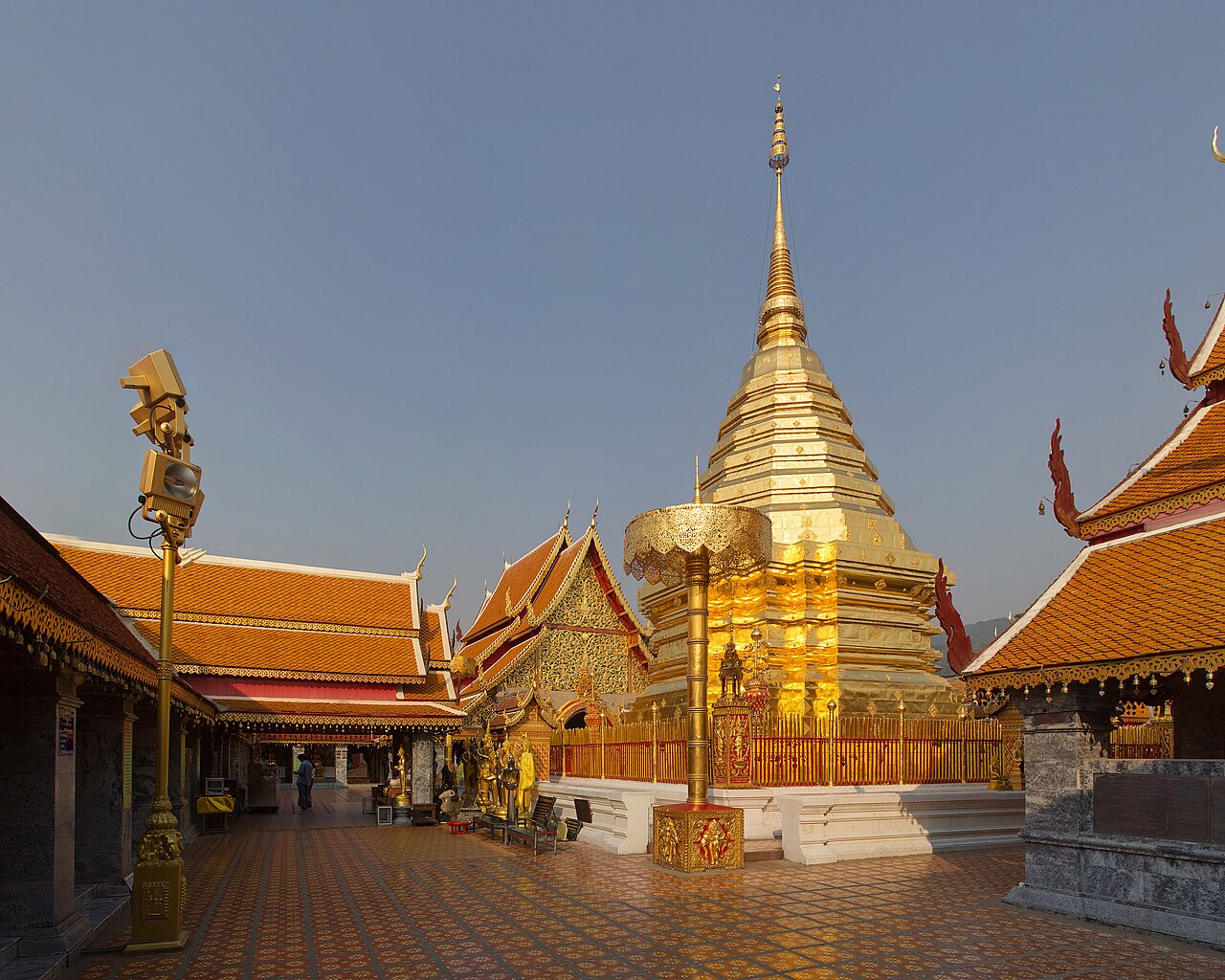
Perched majestically atop Doi Suthep, a mountain overlooking the vibrant city of Chiang Mai, lies one of Thailand’s most revered and visually striking Buddhist temples: Wat Phra That Doi Suthep. More than just a landmark, this sacred site serves as a vital spiritual heart for the Lanna people and a profound pilgrimage destination for Buddhists worldwide. The journey to its summit is itself an initiation, an ascent from the worldly into a realm of serene contemplation and spiritual grace.
The Genesis: A Relic, A Dream, and A White Elephant
The history of Wat Phra That Doi Suthep is woven into the rich tapestry of Lanna legend, dating back to the late 14th century. Its foundation is attributed to King Kuena (r. 1355-1385 CE), the sixth ruler of the Mangrai dynasty. The central narrative revolves around a sacred relic of the Buddha, believed to be a bone from his shoulder, which was brought to Lanna from Sukhothai. This relic miraculously duplicated itself, with one piece enshrined at Wat Suan Dok in Chiang Mai.
For the second piece, King Kuena sought a divinely guided resting place. The legend tells of the relic being placed upon the back of a white elephant, a creature deeply symbolic in Buddhist cosmology. The elephant was set free to wander, ascending the forested slopes of Doi Suthep. Upon reaching a specific spot, the elephant trumpeted three times, circled, and then knelt down, passing away shortly after. This site was interpreted as the chosen location, leading King Kuena to commission the construction of the temple in 1383 CE, forever linking the sacred relic to this revered mountaintop.
Architecture of Awe: The Golden Chedi and Sacred Spaces
The architectural marvel of Wat Phra That Doi Suthep is a testament to Lanna artistry and spiritual devotion. Upon traversing the iconic Naga staircase – a formidable climb of over 300 steps flanked by magnificent serpent railings – pilgrims arrive at the temple’s upper terrace, a serene sanctuary offering respite and spiritual nourishment.
-
The Golden Chedi
At the heart of the complex stands the magnificent gold-plated chedi (stupa), approximately 79 feet (24 meters) tall. This gleaming edifice, a beacon against the mountain sky, is the temple’s spiritual focal point, housing the precious Buddha relic. Circumambulating the chedi in a clockwise direction, a practice known as wian thian, is a profound act of reverence, symbolizing respect for the Triple Gem (Buddha, Dhamma, Sangha) and accumulating merit.
-
Murals and Shrines
Surrounding the chedi, intricate cloisters are adorned with murals depicting scenes from the Jataka tales (stories of the Buddha’s previous lives) and episodes from the life of the Lord Buddha. Numerous Buddha images in various mudras (hand gestures), revered statues of influential monks, and smaller shrines dedicated to different deities invite quiet contemplation and prayer. The air is often filled with the gentle chime of bells, rung by devotees offering prayers and wishes, creating an ethereal soundscape.
-
Panoramic Vistas
Beyond its spiritual treasures, the temple offers breathtaking panoramic views of Chiang Mai city below, especially stunning at dawn or dusk. This elevated perspective often inspires a sense of profound peace, reminding one of the expansive nature of existence and the transient beauty of the world.
The Pilgrimage: A Journey of Faith and Merit-Making
For many, visiting Wat Phra That Doi Suthep is more than just sightseeing; it is a profound act of pilgrimage. The ascent, whether by the Naga staircase or the more modern cable car, symbolizes a spiritual journey towards enlightenment. Devotees often prepare for their visit with pure intentions, seeking to accumulate tham bun (merit) through offerings of flowers, incense, candles, and respectful contemplation.
The temple is particularly vibrant during Visakha Bucha, one of the holiest days in the Buddhist calendar, commemorating the birth, enlightenment, and passing of the Buddha. Thousands of pilgrims embark on the traditional Khruba Sriwichai Pilgrimage Walk, traversing the winding mountain road on foot to reach the temple, a deeply moving expression of faith and devotion.
Conduct and Respect: Embracing the Sacred
As a highly active and deeply sacred place of worship, visitors are encouraged to observe proper etiquette to maintain the sanctity of Wat Phra That Doi Suthep:
- Dress Modestly: Shoulders and knees should be covered. Sarongs are often available for rent at the entrance.
- Remove Footwear: Shoes must be removed before entering the main temple complex and specific shrines.
- Speak Softly: Maintain a quiet and respectful demeanor, especially near areas of prayer.
- Offer Respect: Bow your head slightly when passing Buddha images or revered monks.
- Photography: Generally permitted, but be mindful and respectful, especially during ceremonies.
Wat Phra That Doi Suthep stands not merely as an ancient edifice, but as a living testament to enduring faith, a sanctuary where the echoes of ancient chants mingle with the quiet aspirations of modern-day pilgrims. It invites all who ascend its sacred slopes to pause, reflect, and perhaps, find a moment of profound illumination.
Frequently Asked Questions (FAQ) & Key Concepts
Q: What is the main spiritual purpose of Wat Phra That Doi Suthep?
The primary spiritual purpose of Wat Phra That Doi Suthep is to enshrine a sacred Buddha relic, offering a revered site for pilgrimage, merit-making (tham bun), and contemplation of Buddhist teachings, fostering a deep sense of peace and spiritual connection.
Q: What is the significance of the white elephant in the temple’s founding legend?
The white elephant is a sacred symbol in Buddhist culture, representing purity, strength, and royalty. In the legend of Doi Suthep, its chosen path and resting place were interpreted as a divine sign, guiding King Kuena to the ideal location for the temple’s construction.
Q: What is the main sacred relic housed within the golden chedi?
The golden chedi (stupa) at Wat Phra That Doi Suthep is believed to house a sacred bone fragment from the shoulder of the Lord Buddha, making it one of the most revered sites in Thai Buddhism.
Q: What is the Naga staircase and its symbolic meaning?
The Naga staircase is a grand flight of over 300 steps leading to the temple, flanked by intricately carved multi-headed Naga (mythical serpent) railings. Symbolically, ascending these steps represents the journey of purification and spiritual ascent towards enlightenment.
Q: What is “wian thian” and how is it practiced at the temple?
Wian thian is a traditional Buddhist ritual of circumambulating a sacred object, such as the chedi, three times in a clockwise direction. Practiced while holding flowers, incense, and a lit candle, it symbolizes respect for the Triple Gem: the Buddha, the Dhamma (teachings), and the Sangha (community).
Q: When is the best time to visit Wat Phra That Doi Suthep for a serene experience?
For a more serene and less crowded experience, it is best to visit Wat Phra That Doi Suthep early in the morning (around 6-8 AM) or later in the afternoon (after 4 PM). Sunrise offers stunning views and a tranquil atmosphere for spiritual reflection.